
Quick Answer
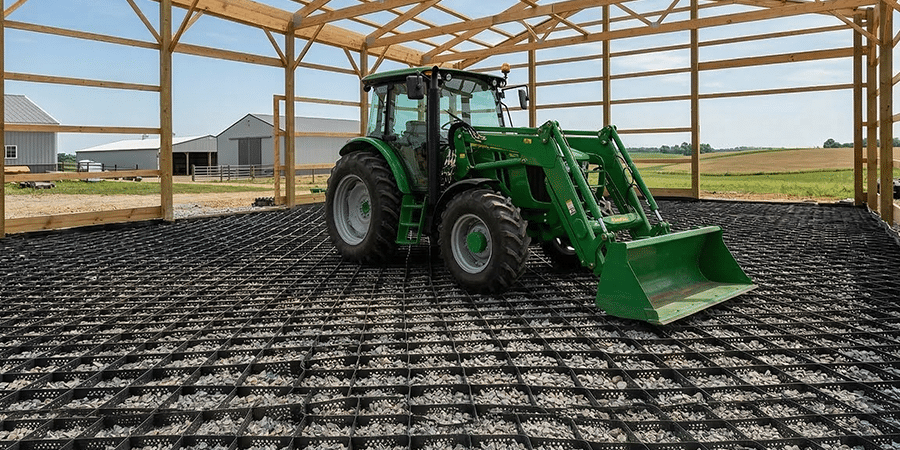
A geocell barn foundation uses interlocking ground grids filled with gravel to create a stable, permeable base that prevents mud while supporting heavy loads without concrete.
Key Takeaways
- Geocell barn foundations cost 60-70% less than concrete while providing superior drainage
- BaseCore geocells distribute heavy equipment loads across a wider area than gravel alone
- Permeable design prevents the ‘mud-trap’ effect common in traditional barn construction
- Installation requires basic excavation and can be completed by farm owners
Traditional concrete barn foundations cost $15,000 or more and create drainage nightmares that trap water around livestock areas. (Geocell Driveway: The Smarter Alternative to Concrete – Backyard Bases, 2025)
BaseCore geocell barn foundations offer a permeable alternative that prevents mud formation while supporting heavy tractors and equipment at a fraction of the cost.
What Is a Geocell Barn Foundation? Understanding the Basics
A geocell barn foundation is a ground stabilization system that uses interlocking plastic cells filled with gravel to create a stable, permeable base. The three-dimensional honeycomb structure distributes weight across a larger area than loose gravel while allowing water to drain through naturally.
BaseCore geocells transform loose aggregate into a rigid foundation through lateral confinement. Each cell is several inches deep and connects to adjacent cells. This creates a unified, load-bearing surface. It prevents gravel from moving and maintains structural integrity under heavy loads.
This system eliminates the need for concrete while providing superior drainage characteristics essential for livestock health and equipment access in agricultural settings.
Integrating Concrete Footers for Vertical Structures
While a geocell system creates a robust, permeable base for your barn’s floor and overall load distribution, it’s important to note that vertical structural elements, such as support poles, wall framing, or posts, still typically require dedicated concrete footers.
These footers provide essential point-load support for the primary vertical structures of your barn, ensuring stability and preventing settling over time. The geocell system then integrates around and between these footers, forming the main floor and sub-base.
Installation Process:
- Excavation: Dig holes for your concrete footers to the appropriate depth and diameter, typically below the frost line in your region.
- Forming and Pouring: Place forms (if necessary) and pour concrete, ensuring it’s level and cured properly.
- Geocell Integration: Once the concrete footers have cured, the geocell system can be laid out around them. The geocells will form the permeable base for the rest of the barn floor, but the vertical loads will be directly transferred to the sturdy concrete footers.
This combined approach leverages the best of both worlds: the superior drainage and cost-effectiveness of a geocell base with the essential structural integrity provided by traditional concrete footers for critical support points.
Why Geocell Barn Foundations Matter: The Science Behind Load Distribution
Horse barns face unique engineering challenges that make traditional foundations problematic. Concrete creates impermeable surfaces that trap moisture and waste, leading to unhealthy conditions for animals and accelerated structural deterioration.
Geocell technology addresses these issues through improved load distribution mechanics. When weight presses down on a geocell system, the confined aggregate spreads the load horizontally across multiple cells. This prevents the rutting and soil displacement that occurs with loose gravel under heavy equipment.
The permeable nature of geocell foundations allows water and waste to drain naturally while maintaining surface stability. This prevents the accumulation of standing water that creates muddy conditions and supports harmful bacteria growth in livestock areas.

How Geocell Barn Foundation Installation Works: Step-by-Step Guide
Step 1: Site Preparation and Excavation
Remove existing vegetation and excavate to a depth of 6-8 inches below the desired finished grade. Ensure the excavated area extends 12 inches beyond the planned foundation perimeter to accommodate edge restraints and proper drainage.
Step 2: Base Layer Installation
Install geotextile fabric across the prepared surface to separate the foundation from underlying soil. This prevents fine particles from migrating upward while maintaining drainage characteristics. Compact the subgrade to achieve uniform density.
Step 3: Geocell Grid Deployment
Unfold BaseCore geocell panels and connect them using the integrated fastening system. Stretch the cells to their full expansion and secure edges with BaseEdge steel edging to prevent lateral movement during filling and compaction.
Step 4: Aggregate Filling and Compaction
Fill each cell with appropriately sized gravel, leaving approximately half an inch below the cell top. Use a plate compactor to consolidate the aggregate and achieve proper density for load-bearing capacity.
Step 5: Surface Finishing
Add a final lift of finer aggregate to bring the surface to the desired grade. Compact thoroughly and ensure proper drainage slope away from barn structures to direct water runoff effectively.

Types of Geocell Foundation Systems: Comparison Guide
Standard Depth Systems (3-4 inches)
Suitable for light agricultural equipment and livestock traffic. Provides adequate stability for typical farm operations while maintaining cost effectiveness for larger coverage areas.
Heavy Duty Systems (4-6 inches)
Designed for heavy tractor traffic and loaded equipment. BaseCore HD systems offer increased load capacity through deeper cell walls and enhanced aggregate confinement for demanding agricultural applications.
Specialty Applications
Custom configurations accommodate specific requirements such as wash bays, feed storage areas, or specialized equipment zones. These systems integrate additional drainage features and enhanced edge treatments.
Implementation Checklist: Getting Started
- Calculate total square footage and order appropriate BaseCore geocell quantities
- Verify local building codes and permit requirements for agricultural structures
- Source quality aggregate meeting gradation specifications for geocell applications
- Arrange for geotextile fabric to prevent soil contamination
- Plan drainage outlets and surface grading for proper water management
- Schedule delivery timing to coordinate with excavation and weather conditions
- Prepare tools including plate compactor, hand tools, and measuring equipment
- Review installation instructions and safety procedures before beginning work
- Establish equipment access routes that won’t damage completed sections
- Plan phased installation if barn remains operational during construction
When to Call a Professional
While geocell barn foundation installation suits many DIY farm projects, complex sites may benefit from professional consultation. Consider expert assistance for installations involving specialized drainage systems, unusual soil conditions, or integration with existing structures.
Professional installation becomes valuable when projects exceed individual capability or when time constraints require rapid completion to maintain farm operations.
Frequently Asked Questions
How much weight can a geocell barn foundation support?
BaseCore geocell systems support over 2,000 pounds per square foot when properly installed with appropriate aggregate, easily handling tractors and loaded equipment. (Improving the punching capacity of footings using geocell, geogrid reinforcement, and base soil stiffness)
Do geocell foundations work in cold climates?
Yes, the permeable design prevents freeze-thaw damage by allowing water drainage, while the flexible geocell material accommodates ground movement without cracking.
How long do geocell barn foundations last?
BaseCore geocells carry warranties to 10 years, with it lasting like concrete due to UV-resistant materials and superior drainage characteristics. (What is Geocell Used For? The Complete Guide to … – BaseCore)
What size gravel works best for geocell barn foundations?
Angular crushed stone between 3/4 inch and 1.5 inches provides optimal compaction and load distribution while maintaining drainage properties in geocell systems.
Can you drive heavy equipment on geocell foundations?
Properly installed geocell foundations support loaded trucks, tractors, and agricultural equipment without rutting or structural failure when designed for anticipated loads.
Conclusion: Your Next Steps
Geocell barn foundations offer farm owners a practical alternative to expensive concrete that addresses drainage concerns while supporting heavy agricultural equipment. The permeable design prevents muddy conditions that compromise animal health and equipment access. Start your geocell barn foundation project by calculating your square footage needs and exploring BaseCore™ Geocell Ground Grids options designed specifically for agricultural applications.
