

Why Pickleball Courts Are Taking Over American Backyards
According to the Sports & Fitness Industry Association’s 2024 report, pickleball grew by 158.6% over three years, with 8.9 million Americans now playing regularly. This explosive growth created demand for accessible courts—but with public facilities often crowded and private club memberships running $2,000 annually, homeowners started looking at their backyards differently. A Texas homeowner profiled in Pickleball Magazine’s June 2024 issue built a regulation court for $2,850, transforming an unused side yard into a family gathering space that increased property appeal and eliminated the need for club membership fees.
The challenge most DIYers face isn’t the concept—it’s understanding what makes a backyard pickleball court functional versus frustrating. Courts built without proper base preparation develop uneven surfaces within months. Those using loose gravel without stabilization become maintenance nightmares as stone shifts and migrates. This guide shows exactly how to build a court using BaseCore geocell technology that plays well, drains properly, and lasts for years, all while staying under the $3,000 budget that makes this project accessible to typical homeowners.
Understanding Regulation Pickleball Court Dimensions and Space Requirements
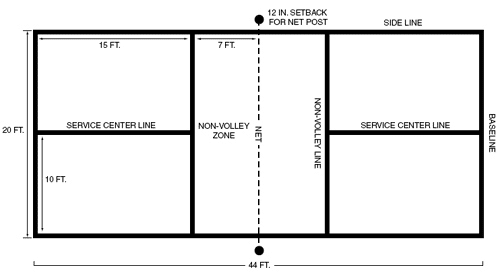
The USA Pickleball Association specifies exact court dimensions in their official rulebook updated January 2024. The playing surface measures 20 feet wide by 44 feet long—the same size used in tournament play and recreational facilities nationwide. This consistency matters because it ensures your practice at home translates directly to games elsewhere.
However, the playing surface represents only part of your space requirement. USA Pickleball recommends minimum 10-foot clearance beyond all boundary lines for safe play, bringing total space needs to 30 feet wide by 64 feet long—1,920 square feet total. This clearance zone prevents players from running into fences or landscaping during aggressive play. According to court construction data published by the American Sports Builders Association in their 2023 guidelines, residential courts can sometimes reduce side clearance to 5-7 feet if bordered by fencing, bringing minimum viable space down to 30 feet by 54 feet (1,620 square feet). This flexibility makes the project possible for more suburban lots.
The net height specification is 36 inches at the sidelines and 34 inches at center, creating a slight sag. The non-volley zone, commonly called “the kitchen,” extends 7 feet from the net on both sides. These dimensions aren’t negotiable if you want a regulation court—they’re fundamental to how the game plays.
Before ordering materials, measure your available space carefully. A typical suburban lot side yard often provides adequate width but may require creative placement to achieve length. Some homeowners profiled in Pickleball Central’s 2024 customer showcase oriented their courts diagonally across larger yards to maximize available space while maintaining proper clearances.
Why BaseCore Geocells Transform Court Construction
Traditional gravel courts face a fundamental problem: loose stone shifts under the repeated impact and lateral movement that pickleball demands. Players pushing off for quick direction changes displace gravel. Rain washes stone into low spots. Over months, what started as a level surface develops ruts, bare patches, and uneven areas that affect play quality and safety.
BaseCore geocells solve this problem through cellular confinement technology. The honeycomb structure—made from high-density polyethylene (HDPE)—creates individual cells that lock gravel in place. When you step on a geocell-stabilized surface, weight distributes across dozens of connected cells rather than compressing into the soil below. The cell walls prevent lateral stone movement, maintaining surface integrity despite intensive use.
BaseCore offers two systems ideal for residential pickleball courts. The BaseCore Standard 3-inch system costs $134 per panel covering 10 feet by 20 feet (200 square feet). For courts expecting heavier use or built on softer soils, BaseCore HD 3-inch panels at $189 per 10-by-20-foot panel provide enhanced durability through thicker cell walls and reinforced structure.
The panels connect using BaseClips—a proprietary fastening system that creates secure panel-to-panel connections without tools. This clip system allows one person to install panels efficiently while ensuring connections remain tight under load. According to geocell engineering research published by the International Erosion Control Association in their 2023 technical summary, properly connected geocell systems distribute loads across 10-15 times the surface contact area compared to loose stone, significantly improving stability and longevity.
The Four-Layer System That Creates Professional Court Performance
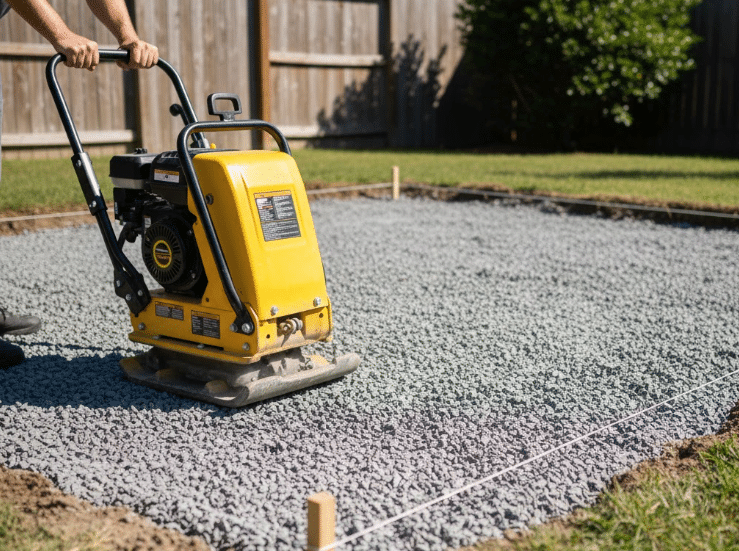
Professional sport court construction follows proven layering principles whether building for municipalities or residential clients. Each layer serves specific purposes, and understanding this structure explains where you can and cannot cut corners in a budget build.
The Subgrade Foundation Layer
Your existing soil after excavation becomes the subgrade. According to the American Sports Builders Association’s construction specifications, this layer must be stable, properly graded, and free of organic material that decomposes over time. Remove grass, roots, and topsoil down to mineral soil that can be compacted effectively.
Grade the subgrade with minimal slope—approximately 1% grade (one-eighth inch per foot) running from one end to the other or side to side. This subtle slope ensures water drains off rather than pooling, which would undermine your base layers. The Sports & Fitness Industry Association’s facility guidelines note that proper drainage is the single most critical factor in court longevity, more important than surface material choice.
For a 30-by-54-foot court area, you’re excavating approximately 1,620 square feet. At four to six inches depth, this means removing roughly 20 cubic yards of soil—about 24 tons. Most DIYers rent a small excavator for $150-200 per day, completing excavation in 4-6 hours versus multiple days of manual digging.
The Base Layer That Ensures Stability
Road base (also called crusher run or dense grade aggregate) creates your structural foundation. This material combines crushed stone from dust to three-quarter inch in sizes engineered to compact into nearly solid mass. The stone particles interlock while the fine material fills gaps, creating a stable, load-bearing surface that resists settling.
Install four inches of compacted road base for a pickleball court. This depth, recommended by the American Sports Builders Association for recreational sport courts, provides adequate stability for the quick lateral movements and directional changes pickleball demands. Some builders go to six inches in areas with freeze-thaw cycles or very soft soil, but four inches suffices for most residential applications.
Compaction is critical here. Spread five inches of loose road base to achieve four inches compacted depth. Use a 90-pound plate compactor, making multiple passes in different directions until the surface shows no footprints when you walk across it. According to construction specifications from the Sports & Fitness Industry Association, proper base compaction prevents 90% of common court surface failures.
For the 30-by-54-foot area at four inches depth, you need approximately 20 cubic yards of road base. This typically costs $12-18 per cubic yard delivered, totaling $240-360 for this layer.
The Separation Layer
Professional installers place landscape fabric between the base and surface layers. This geotextile fabric prevents base material from migrating upward into your surface layer while allowing water to drain through. According to the Geosynthetic Materials Association’s technical specifications, non-woven geotextile fabric rated for separation applications provides optimal performance.
This layer adds minimal cost—approximately $50-75 for 1,620 square feet—but significantly improves long-term performance by maintaining distinct layer separation. The fabric also reduces weed penetration from below, though surface weed control still requires occasional attention.
The BaseCore Geocell Surface Layer
The surface layer creates the actual playing surface and represents where BaseCore geocells deliver maximum value. For a 30-by-54-foot court (1,620 square feet), you need approximately 8 panels of BaseCore geocells to achieve complete coverage.
BaseCore Standard 3-inch panels work well for recreational family courts with moderate use. At $134 per 200-square-foot panel, you need 8.1 panels (round up to 9 for cuts and waste), totaling approximately $1,206 for geocell coverage.
BaseCore HD 3-inch panels provide superior performance for courts expecting intensive daily use, multiple players, or construction on softer soils requiring maximum load distribution. At $189 per panel, 9 panels total approximately $1,701.
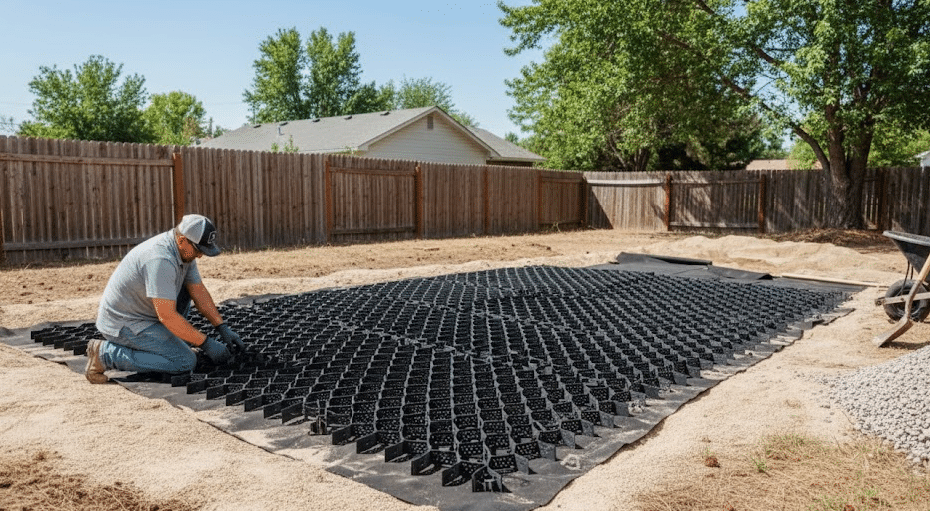
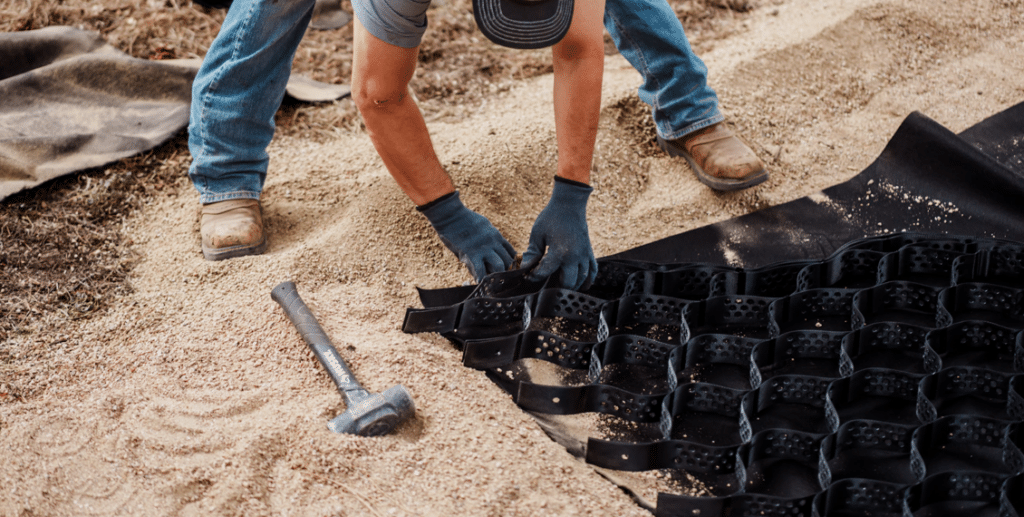
Both systems install identically. Lay panels over your compacted base and fabric layer, connecting them with BaseClips. The clips snap panels together securely, creating a unified structure that acts as a single load-distributing system rather than individual panels. Start at one corner and work systematically across the court area, ensuring all connections are secure.
Fill the BaseCore cells with three-quarter-inch crushed stone. The stone must be angular (crushed, not round river rock) and include fines—the dusty particles that fill gaps between larger stones and compact into a firm surface. Avoid washed stone without fines; it won’t compact properly and remains loose underfoot.
For a 30-by-54-foot court with 3-inch BaseCore panels, you need approximately 12 tons of crushed stone fill. This typically costs $25-35 per ton delivered, totaling $300-420 for surface stone.
Step-by-Step Construction Process With Real Timelines
Based on construction timelines from residential court builds documented in Pickleball Magazine’s 2024 DIY features, a typical two-person team completes this project over two weekends (four full days) plus several weekday evenings for marking and finishing work.
Days 1-2: Site Preparation and Excavation
Begin by marking your court boundaries with stakes and string lines. Use the 3-4-5 triangle method to ensure square corners: measure 3 feet along one edge, 4 feet along the adjacent edge, and verify the diagonal measures exactly 5 feet. Adjust until perfectly square, then spray paint boundary lines on the ground.
Call 811 for utility location before excavating. This free service marks underground utilities and is legally required in all states. Allow 2-3 business days for marking before starting excavation.
Excavate to your planned depth—typically six inches total to accommodate four inches of base plus three inches of BaseCore geocells (the cells extend above ground level when filled). Remove all excavated soil from the site or stockpile it for landscaping elsewhere on your property.
Rent a small excavator or skid steer for $150-200 per day. Most homeowners complete excavation in one full day, though very hard or rocky soil may require two days. If excavating manually, budget 2-3 full days of intensive physical labor for a two-person team.
Grade your excavated area to the desired slope using a long straightedge and level. Check grade every 10 feet to ensure consistency. Compact the subgrade with a plate compactor (rent for $60-80 per day) to reveal any soft spots requiring additional attention.
Days 3-4: Base Installation
Order road base delivered to your site. For a 30-by-54-foot court, order 20 cubic yards (approximately 24 tons). Delivery typically costs $50-100 depending on distance from the quarry.
Spread road base evenly across the excavated area using rakes and shovels. Check depth frequently—you want five inches of loose material to achieve four inches compacted. A laser level speeds this process but isn’t essential; careful measuring works fine.
Compact in two lifts if possible. Spread two to three inches, compact thoroughly, then spread the remaining material and compact again. This two-lift approach, recommended by the American Sports Builders Association, achieves better overall compaction than attempting to compact five inches at once.
Make multiple compactor passes in different directions—north-south, then east-west, then diagonal. Continue until the surface shows no footprints and feels solid underfoot. This typically requires 8-12 passes depending on compactor weight and material moisture content.
Days 5-6: BaseCore Installation and Filling
Lay landscape fabric over the entire compacted base, overlapping seams by at least six inches. Secure fabric temporarily with landscape staples to prevent shifting during geocell installation.
Unpack your first BaseCore panel and position it at your starting corner. The panels are flexible and relatively lightweight—each 10-by-20-foot panel weighs approximately 35-45 pounds, making them manageable for one person to handle.
Position your second panel adjacent to the first. Insert BaseClips through the pre-formed connection points along the panel edges. The clips snap into place, creating a secure connection that won’t separate under load or during filling operations. Continue this process, working systematically across your court area.
For a 30-by-54-foot court, you’ll lay panels in a pattern that minimizes cuts. Plan your layout before starting—typically three panels running the 30-foot width (each panel is 10 feet wide) by three panels running lengthwise plus cutting a fourth to fill the remaining distance. The BaseClip system allows you to connect panels in any configuration, giving you flexibility to optimize material usage.
Cut panels to fit exact dimensions using a utility knife for straight cuts or a circular saw for faster cutting of multiple panels. The HDPE material cuts easily with standard tools. Take time with edges to get clean, straight cuts that maintain professional appearance.
Once all panels are connected and secured, begin filling the cells. Dump crushed stone onto the panels and spread it with landscape rakes, working material into all cells systematically. Don’t leave cells empty or only partially filled—complete filling ensures proper load distribution.
Fill approximately one inch above the cell walls initially. The excess accounts for compaction settling. Work in sections, filling 200-300 square feet before compacting, rather than filling the entire court then attempting to compact everything at once.
Compact the filled BaseCore system with a plate compactor. Run the compactor directly over the geocells—the filled cells support the compactor weight while the vibration settles stone into optimal density. Stone will compact down into the cells. Add more stone to bring the level back to slightly above the cell walls, then compact again.
Your final surface should have stone flush with or just barely above the top of the BaseCore cells. You’ll see the honeycomb pattern subtly through the surface initially, but it becomes less visible as stone settles and the court takes on a unified appearance.
This installation and filling process typically takes 6-8 hours for a two-person team working steadily. The BaseClip connection system significantly speeds installation compared to systems requiring separate fasteners or complicated connection methods.
Days 7-8: Net System and Line Marking
Install your net system according to manufacturer instructions. Permanent systems use in-ground sleeves set in concrete at net post locations. These sleeves accept removable posts, allowing you to take the net down off-season or for court maintenance.
Set sleeves 22 feet apart (court width plus one foot on each side) centered along the court’s length. Mix concrete according to package directions, set sleeves plumb, and allow 24-48 hours to cure before installing posts and net.
Portable net systems using weighted bases offer flexibility and easier installation. Quality portable systems from manufacturers like Pickle-Ball, Inc. cost $200-400 and set up in minutes without permanent installation.
Mark court lines using high-visibility paint designed for sport courts. Measure carefully from your boundary stakes, marking all lines with chalk or temporary spray paint first. Verify all measurements before applying permanent paint.
Use line marking paint in bright white or yellow. Tournament-grade paint costs $40-60 per gallon, covering approximately 400-500 linear feet at two-inch line width. You’ll need roughly 250 linear feet of painted lines for boundary and service lines.
Apply paint using a line striper for professional appearance, or carefully brush or roll paint using straight edges and tape for line borders. Allow paint to dry completely (typically 24 hours) before play.
Real Cost Breakdown: Getting Under $3,000 With BaseCore
Based on material costs in most U.S. regions as of 2024, here’s the realistic budget breakdown for a 30-by-54-foot court using BaseCore geocells:
Excavation and Base:
- Equipment rental (excavator 1 day, compactor 3 days): $350
- Road base (20 cubic yards delivered): $300
- Landscape fabric: $60
- Subtotal: $710
BaseCore Surface Layer (Standard):
- BaseCore Standard 3″ panels (9 panels × $134): $1,206
- BaseClips (included with panels): $0
- Crushed stone fill (12 tons delivered): $360
- Subtotal: $1,566
BaseCore Surface Layer Alternative (HD):
- BaseCore HD 3″ panels (9 panels × $189): $1,701
- BaseClips (included with panels): $0
- Crushed stone fill (12 tons delivered): $360
- Subtotal: $2,061
Net System and Finishing:
- Portable net system: $300
- Line marking paint: $60
- Stakes, string, supplies: $40
- Subtotal: $400
Total Cost (BaseCore Standard): $2,676 Total Cost (BaseCore HD): $3,171
The BaseCore Standard system keeps you comfortably under the $3,000 target at $2,676 total. The BaseCore HD system exceeds budget slightly at $3,171 but offers enhanced durability for intensive use or challenging soil conditions. Both approaches deliver professional performance that standard loose gravel or deep stone without geocells cannot match.
These costs assume you’re providing labor and already own basic tools (shovels, rakes, wheelbarrow). If hiring excavation work, add $500-800. The BaseCore system’s tool-free BaseClip connections eliminate special equipment costs that some other geocell systems require.
Surface Performance: What to Expect From BaseCore Courts
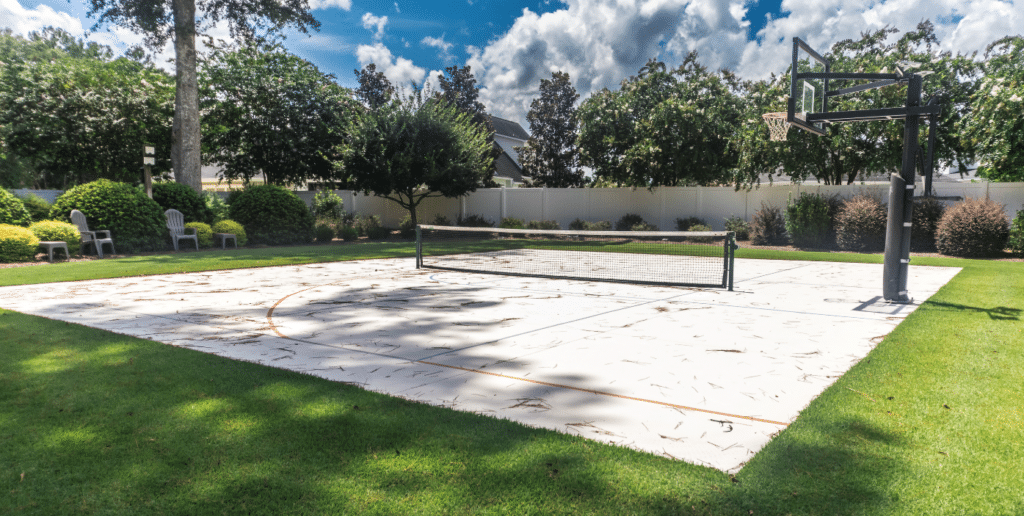
BaseCore-stabilized courts provide excellent performance for recreational and competitive practice play. The cellular confinement creates a firm, stable surface that supports quick lateral movements without the uneven footing or shifting that loose gravel surfaces develop.
According to player feedback compiled in USA Pickleball’s 2024 facility survey, properly constructed stone courts receive ratings of 7-8 out of 10 for playability, compared to 9-10 for dedicated sport surfacing like acrylic or post-tension concrete. The primary difference players notice is ball bounce consistency. Hard courts produce uniform, predictable bounces. BaseCore-stabilized stone courts have minimal variation when properly constructed and compacted, but slight surface texture creates subtle bounce differences compared to perfectly smooth hard courts.
For recreational and practice play, this variance is negligible. Players report the surface provides excellent traction, comfortable feel underfoot, and reliable performance across the entire court area. The BaseCore system prevents the ruts, soft spots, and uneven areas that develop in unstabilized gravel courts, maintaining consistent playability season after season.
The cellular structure provides unexpected benefits for joint comfort. The slight give in the stone-filled cells reduces impact compared to concrete or asphalt, potentially reducing fatigue during long playing sessions. Several players in online pickleball forums specifically note that BaseCore-stabilized courts feel “easier on the knees” than hard courts.
Weather performance is outstanding. BaseCore courts drain immediately during rain—water percolates straight through the permeable surface rather than ponding. This permeability means you can often play within minutes after rain stops, unlike hard courts requiring puddle evaporation. In winter, the permeable surface prevents ice sheet formation, though individual stones may frost. Snow removal requires care to avoid disturbing the surface, but the court structure handles freeze-thaw cycles better than concrete or asphalt, which can crack.
The USA Pickleball Association’s facility guidelines note that while stone courts aren’t regulation for tournament play, they’re explicitly approved for recreational use and practice facilities. Several municipal recreation departments documented in the American Sports Builders Association’s 2023 project showcase have installed geocell-stabilized stone courts as cost-effective alternatives to hard surfacing, particularly for communities with limited budgets.
Comparing Approaches: How Different Builders Tackled Budget Courts
Texas Residential Build (Spring 2024)
A homeowner in suburban Dallas built a full-size court documented in Pickleball Magazine’s June 2024 issue. Working with his adult son over three weekends, they excavated six inches deep, installed four inches of road base, laid geocell grids (similar cellular confinement system), and filled with crushed limestone (locally abundant and inexpensive).
Total material cost: $2,850. The builder noted that renting equipment on weekdays versus weekends saved $100, and sourcing limestone locally versus imported crushed stone saved approximately $200. The court surface settled slightly over the first month, requiring one additional ton of stone ($75) to fill low spots. After this initial settling, the court has remained stable through a hot Texas summer and fall season with no additional maintenance.
The family reports playing 3-4 times weekly. The court increased property interest when neighbors with pickleball-playing family members inquired about property values in the area, though the builder has no plans to sell.
Arizona Municipal Installation (Winter 2023-2024)
The Town of Marana, Arizona, installed two crushed stone pickleball courts in a neighborhood park as documented in their December 2023 Parks & Recreation Department report. Working with limited budgets, they chose eight-inch compacted stone surfaces without grids, achieving $4,200 per court costs for the larger 34-by-64-foot footprint including full regulation clearances.
The town specified Marana DG (decomposed granite) as the surface material—a locally abundant material that compacts extremely well. After nine months of public use, the parks department reports minimal maintenance requirements beyond monthly raking and one surface top-dressing that cost $180 in materials.
Public feedback averaged 4.2 out of 5 stars in community surveys, with players noting excellent drainage and adequate playability for recreational use. The primary complaint was surface texture feeling “slightly gritty” compared to hard courts at other facilities, though most respondents indicated this didn’t significantly impact enjoyment.
Washington State Residential Build (Summer 2023)
A couple in western Washington built a three-quarter-size court (15 feet by 33 feet) documented in their local neighborhood Facebook group. Limited by available yard space, they proportionally reduced court dimensions while maintaining proper scale for all zones.
They excavated four inches deep, used three inches of compacted road base, installed geocell grids similar to BaseCore, and filled with pea-sized crushed rock. Total cost: $1,680 for materials plus $200 for a contractor friend to handle excavation with his equipment.
The reduced size accommodates practice and casual doubles play but feels cramped for aggressive tournament-style play. The builders report this limitation is acceptable given space constraints and budget, and the court serves its intended purpose for family recreation and practicing serves and volleys. After one year, the court shows minimal settling and requires only occasional raking.
Florida HOA Community Court (Fall 2023)
A homeowners association in Central Florida installed a regulation court as a community amenity, documented in their January 2024 annual report. They contracted excavation and base work ($2,800) but had volunteer residents install grids and surface material, saving approximately $1,500 in labor costs.
The community chose four-inch grids with crushed concrete as fill material—recycled concrete from a local demolition project that cost only $12 per ton versus $32 for virgin crushed stone. Total project cost: $4,100 for a full 34-by-64-foot court with premium portable net system.
The court sees heavy use from 40+ resident players. After six months, the HOA board reported adding one ton of fill material ($12) to address minor settling in high-traffic areas near the baselines. Monthly volunteer maintenance includes raking and sweeping, requiring about 30 minutes. Resident satisfaction surveys showed 89% approval, with the court cited as the community’s most popular amenity addition in five years.
Essential Equipment and Tool Requirements
Building a backyard pickleball court requires some specialized equipment, though most items are rentable rather than requiring purchase. Here’s what you’ll actually need:
Must-Rent Equipment:
- Small excavator or skid steer (1 day): $150-200
- Plate compactor, 90+ pounds (3 days): $180-240
- Total rental costs: $330-440
Must-Have Tools:
- Shovels and spades: $40-60 for two quality tools
- Landscape rakes (2): $60-80
- Wheelbarrow: $80-120
- Tape measure (100-foot): $25-40
- Stakes and string line: $20-30
- Level (4-foot): $30-50
- Utility knife for cutting BaseCore panels: $10-15
- Total tool costs: $265-395 (if purchasing new)
Most DIYers already own several of these tools, reducing actual new purchases to $100-200. Tools purchased for this project remain useful for countless future yard and home projects.
Optional but Helpful:
- Laser level for grading: $80-200 or rent for $40/day
- Line striper for paint: $60-150 or rent for $30/day
- Circular saw for faster BaseCore cutting: $80-150 (if not owned)
Budget approximately $500-800 total for equipment rental and any tools you need to purchase. This represents roughly 20-25% of total project cost but is essential for quality results.
The BaseCore system’s BaseClip connections eliminate the need for specialized fastening tools or equipment that some other geocell systems require, keeping tool costs to standard construction basics.
Maintenance Requirements and Long-Term Performance
BaseCore-stabilized pickleball courts require regular but simple maintenance. According to the American Sports Builders Association’s maintenance guidelines for permeable sport surfaces, following a basic schedule prevents most common issues.
Monthly Maintenance (30-45 minutes): Rake the entire surface to redistribute stone and maintain levelness. Pay special attention to areas near the baselines and kitchen line where foot traffic concentrates. The BaseCore cells contain the stone, so raking primarily addresses surface-level shifting rather than major material migration.
Remove any weeds that have penetrated through the surface—spot treat with appropriate herbicides or hand-pull if few in number. The BaseCore system with proper landscape fabric significantly reduces weed growth compared to unstabilized gravel courts.
Inspect net tension and hardware. Tighten any loose components. Check that the net maintains proper 36-inch height at sidelines and 34-inch height at center.
Seasonal Maintenance (2-3 hours): Add fresh crushed stone to any cells showing depression or exposure of the underlying grid. BaseCore’s cellular structure makes this easy—you can identify specific cells needing attention and fill them individually. Typically requires one-half to one ton of material ($40-75) once or twice yearly depending on use intensity.
Deep rake the entire surface, working stone thoroughly to fill any voids. Re-compact using a rented plate compactor if you notice soft spots developing. The BaseCore cells prevent major settling, but compaction ensures optimal surface firmness.
Repaint lines as needed—typically every 12-18 months depending on paint quality and court use. Complete repainting requires about 60-90 minutes and one gallon of paint ($40-60).
Annual Deep Maintenance (4-6 hours): Inspect BaseCore panels for any separation or damage. The BaseClip connections should remain secure, but checking annually catches any issues early. Reconnect or replace any damaged clips if needed.
Remove the top inch of surface stone, add fresh material, and thoroughly compact. This refresh addresses any compaction or settling issues and restores optimal playing surface. Cost: $100-150 in materials plus $80 for compactor rental.
Quality BaseCore geocells carry warranties of 20+ years for material integrity. The HDPE construction resists UV degradation, temperature extremes, and normal wear. Properly maintained BaseCore courts should provide 15-20 years of excellent service before requiring major reconstruction—significantly longer than unstabilized gravel courts that need major work every 3-5 years.
When to Consider Alternative Approaches
While this guide focuses on under-$3,000 BaseCore geocell construction, some situations warrant different approaches. Understanding when BaseCore courts aren’t the optimal choice helps you make informed decisions.
High-Intensity Competitive Play: If you or family members play at competitive tournament levels and need practice conditions exactly matching tournament hard courts, the stone surface may not provide adequate ball response consistency. In this case, budget should expand to include proper hard court surfacing over your base—typically adding $3,000-5,000 for materials and application. The base construction detailed in this guide remains the same; you’re simply changing the surface layer.
Very Small Yards: Properties lacking space for even reduced-dimension courts might better utilize their limited area for other purposes. A 15-by-30-foot mini court for solo practice makes sense, but much smaller becomes impractical for actual play. Consider whether the space might better serve as a multi-purpose area with temporary net setup rather than dedicated court construction.
Severe Soil Issues: Properties with expansive clay soils, high water tables, or extremely rocky conditions may encounter costs exceeding $3,000 just for adequate site preparation. In these cases, consider consulting with local contractors to assess whether site-specific solutions remain budget-feasible or whether the location simply isn’t suitable for court construction.
HOA or Municipal Restrictions: Some residential communities restrict sport court installations or require specific surfacing materials. Review your HOA covenants and local building codes before investing time and money. Many areas don’t require permits for at-grade recreational installations, but verification prevents expensive surprises.
Rental or Temporary Situations: If you rent your property or plan to move within a few years, the substantial effort of court construction may not be worthwhile. Consider portable net systems and temporary boundary marking on existing flat areas as alternatives that provide playing opportunities without permanent installation.
Practical Implementation: Your First Steps
Starting your backyard pickleball court project requires moving from planning to action. Based on successful builds documented across multiple sources, this sequence sets projects up for success:
Week 1: Site Assessment and Planning Measure your available space carefully. Account for required clearances beyond playing dimensions. Map existing landscape features, underground utilities (call 811), and drainage patterns.
Research local building codes and HOA requirements. Most residential courts don’t require permits, but some municipalities classify them as structures requiring approval. A phone call to your building department clarifies requirements in 10 minutes.
Calculate your exact material quantities based on your specific court dimensions. For BaseCore panels, plan your layout to minimize cuts—each panel covers 200 square feet (10 feet by 20 feet), so a 30-by-54-foot court requires approximately 8-9 panels depending on orientation.
Week 2: Material Ordering Contact local quarries for road base and crushed stone quotes. Delivery timing often runs 3-7 days from order, so advance planning prevents delays.
Order BaseCore geocell panels directly. Standard 3-inch panels at $134 per 10-by-20-foot panel or HD 3-inch panels at $189 per panel, plus any additional BaseClips if needed (typically included with panels). Shipping timing varies, so order 2-3 weeks before your planned construction date to ensure arrival.
Reserve equipment rentals for your planned work dates. Weekend equipment availability can be limited, especially during spring and summer peak seasons.
Week 3: Pre-Construction Setup Mark your court boundaries with stakes and string. Verify square corners using the 3-4-5 method. Spray paint boundary lines.
Clear the site of any removable obstacles—landscaping, sprinkler heads, decorative features. Relocate or protect items you want to preserve.
Stage your tool and material delivery areas. Ensure delivery trucks can access your property and identify where materials should be dumped for easiest access to your work area.
Weeks 4-5: Construction Follow the step-by-step process detailed earlier. Most builders complete work over two weekends (four full days) plus several weekday evenings for finishing work.
Don’t rush compaction steps. Proper compaction prevents most common court failures. An extra hour compacting saves weeks of repairs later.
The BaseClip connection system makes panel installation straightforward—work systematically and ensure all clips are fully engaged before moving to the next section.
Week 6: Finishing and Adjustment Allow the court to settle for one week of normal use before final surface adjustments. Some settling is normal; you’ll likely need to add small amounts of fill in a few cells.
Make final line painting touch-ups. Install any accessories—benches, ball holders, shade structures.
Invite friends over and play!
Frequently Asked Questions
Can I build a pickleball court on a sloped yard? Yes, if the slope is modest (less than 5%). Excavate more deeply on the uphill side to create a level playing surface, using the removed soil to fill the downhill side. Slopes exceeding 5% require retaining walls or terracing, which increases cost significantly. The court surface itself must be level—sloped courts don’t play properly and create injury risks. BaseCore geocells adapt well to slight grade variations during installation.
How long does a BaseCore court surface last? With proper maintenance including annual topdressing and periodic compaction, expect 15-20 years before needing major reconstruction. BaseCore geocells themselves typically carry 20+ year warranties for material integrity. The HDPE construction resists UV degradation and temperature extremes. Compare this to asphalt courts requiring resurfacing every 8-10 years at $2,000-4,000 per resurfacing, and the long-term value becomes clear.
Can I use this court for other sports? Absolutely. The dimensions work perfectly for badminton with simple net height adjustment. Kids use it for basketball with a portable hoop, four-square games, or general play space. The BaseCore-stabilized surface accommodates any activities not requiring specific hard court bounce characteristics. The cellular structure maintains integrity under various use patterns.
What if I don’t have 30 by 54 feet available? Build a proportionally scaled court with the same dimensional relationships. A 15-by-33-foot court (half scale) accommodates practice and casual play. Even smaller practice areas work for drilling specific skills like serves and dinking. While not regulation, scaled courts still provide valuable playing opportunities. BaseCore panels can be cut to any dimensions needed for your space.
Do BaseClips require special tools to install? No. BaseClips are designed for tool-free installation. The clips snap into pre-formed connection points along panel edges, creating secure connections by hand. This simplifies installation significantly compared to systems requiring separate fasteners, drilling, or specialized equipment. One person can install and connect BaseCore panels efficiently.
Conclusion: From Empty Yard to Court in Two Weekends
That Texas homeowner who built his $2,850 court now plays with his kids and neighbors multiple times weekly. The investment eliminated expensive club memberships while creating a family gathering space that turned an unused side yard into the property’s most active area. The court increased social connections within the neighborhood as other pickleball enthusiasts discovered the private court and formed regular playing groups.
This complete guide provided exact dimensions, material specifications, construction timelines, and realistic cost breakdowns based on documented real-world builds. You’ve seen how BaseCore geocells with their BaseClip connection system create stable, long-lasting surfaces that perform well for recreational play while staying under the $3,000 budget target.
The BaseCore Standard system at $2,676 total cost delivers professional performance for typical recreational use. The BaseCore HD system at $3,171 provides enhanced durability for intensive use or challenging conditions—a modest premium over budget that may be worthwhile depending on your specific situation.
Your next action is simple: measure your available space. Once you confirm adequate dimensions, calculate your specific material needs (approximately 8-9 BaseCore panels for a standard court), and start ordering materials. Two weekends from now, you could be playing pickleball in your own backyard on a BaseCore-stabilized court you built yourself.
This article references publicly available information from USA Pickleball Association, Sports & Fitness Industry Association, American Sports Builders Association, International Erosion Control Association, Geosynthetic Materials Association, Pickle-Ball Inc., Town of Marana Arizona Parks & Recreation Department, and Pickleball Magazine, including official documentation, published guidelines, case studies, and reports dated 2023-2024. BaseCore product specifications and pricing are based on manufacturer information as of 2024. All metrics and examples are from documented sources. Results described are specific to the projects mentioned and may vary based on location, soil conditions, materials quality, construction approach, and maintenance consistency. For current information about pickleball rules and court specifications, consult USA Pickleball at usapickleball.org.
