
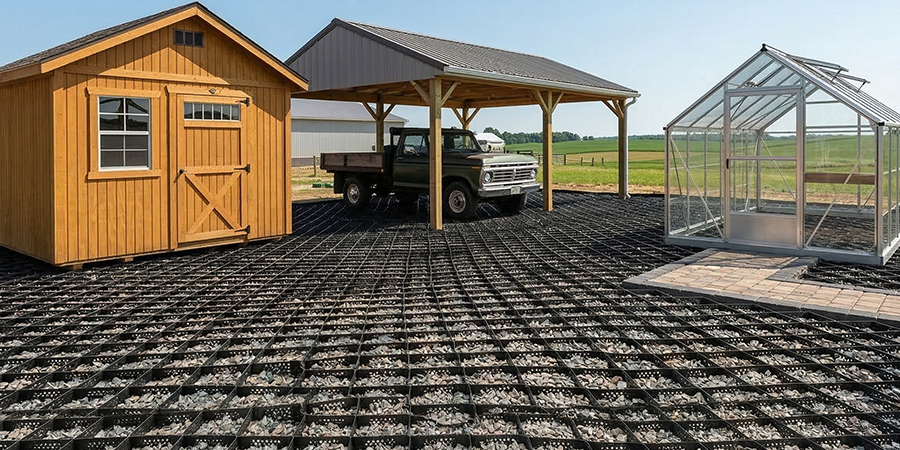
A geocell foundation homestead system uses BaseCore geocell grids as a unified foundation solution for sheds, carports, greenhouses, and outdoor living spaces, eliminating the need for different materials and contractors across multiple projects.
Key Takeaways: Why Choose BaseCore Geocell?
| Feature/Benefit | Description/Impact |
| Unified Foundation | One system for sheds, carports, greenhouses, hot tubs, driveways – simplifies planning! |
| Cost-Effective | A 200 sq ft kit costs just $134.95, covering most residential structures. |
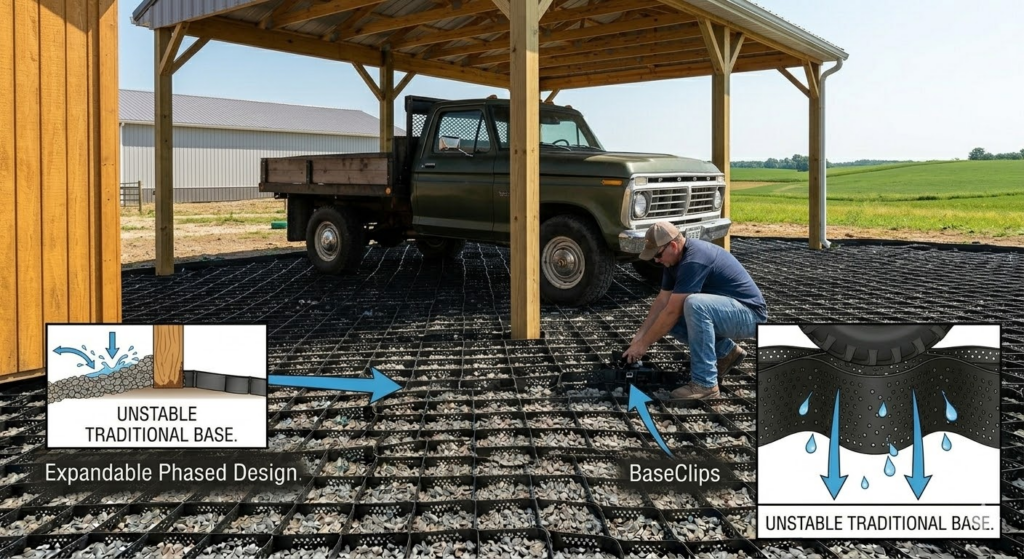
| Expandable Design | Panels interconnect with BaseClips, allowing easy, phased expansion over time. |
| Durable & Permeable | Prevents water damage with a 75+ year lifespan, ensuring long-term stability. |
| DIY Friendly | No concrete specialists or heavy equipment needed for installation, saving time and money. |
Cost Comparison: BaseCore vs. Traditional Foundations
| Structure | Traditional Foundation | BaseCore System | Savings |
| 12×16 Shed | $450 (concrete pad) | $270 (BaseCore + infill) | $180 |
| Single Carport | $800 (gravel + edging) | $405 (BaseCore HD + stone) | $395 |
| 10×12 Gazebo | $650 (pavers + base) | $324 (BaseCore + decorative stone) | $326 |
| Hot Tub Pad | $600 (concrete pour) | $189 (BaseCore + gravel) | $411 |
| Total Project Cost | $2,500 | $1,188 | $1,312 |
Planning a homestead means juggling multiple foundation projects over time. Your shed needs a stable base, your carport requires vehicle-grade support, and your greenhouse demands proper drainage. Traditional approaches force you to learn different materials, hire various contractors, and manage separate timelines for each structure. BaseCore geocell foundation systems solve this complexity by providing one proven solution for every backyard building project.
What Is a Multi-Use Geocell Foundation System? Understanding the Basics
A geocell foundation homestead approach is a ground stabilization method using interconnected plastic grid panels filled with gravel or other materials to create stable, permeable foundations. BaseCore geocell systems consist of expandable honeycomb-structured panels that confine and reinforce infill materials, distributing loads across a wider area than traditional foundations.
The system works through cellular confinement technology, where each hexagonal cell prevents lateral movement of infill materials under load. This creates a stable platform that handles both light structures like sheds and heavy loads like vehicle traffic. Unlike concrete foundations that crack or gravel bases that shift, geocell foundations maintain their structural integrity while allowing water drainage.
Why Geocell Foundations Work for Every Homestead Structure
BaseCore geocell systems handle diverse foundation requirements because they address the core engineering challenges of ground instability, drainage, and load distribution. The cellular structure distributes weight evenly, preventing the rutting and settling that plague traditional gravel foundations.
For shed foundations, BaseCore prevents the splashback rot and rust that destroys structures built on traditional gravel pads. The permeable design eliminates standing water while maintaining a level surface. Vehicle-bearing applications like carports benefit from the enhanced load distribution that prevents ruts and potholes under wheel paths.
The system’s versatility extends to specialized applications. Greenhouse foundations require precise drainage to prevent root waterlogging, while hot tub bases must support over 4,000 pounds when filled (Foundation Guide | Wisconsin Greenhouse Company). BaseCore handles both requirements with the same basic installation approach, adjusted only for depth and infill type.
How BaseCore Works: Step-by-Step Foundation Guide
Installing BaseCore geocell foundations follows a consistent process regardless of the structure type, simplifying the learning curve for multi-project homesteads.
Step 1: Site Preparation
Clear the area 12 inches larger than your structure footprint. Remove grass, weeds, and organic matter down to stable soil. Grade for a 2% slope away from the building location to ensure proper drainage.
Step 2: Base Layer Installation
Install geotextile fabric across the prepared area. This prevents ground contamination while allowing water drainage. The fabric stabilizes the foundation and prevents weeds from growing through the system.
Step 3: Panel Placement
Expand BaseCore panels to full size and position them according to your layout. For structures requiring expansion, use BaseClips to connect panels securely. Ensure panel edges align properly for uniform load distribution.
Step 4: Infill and Compaction
Fill each cell with appropriate material—crushed stone for heavy loads, pea gravel for drainage-critical applications. Overfill cells by 1/4 inch, then compact using a plate compactor or hand tamper until material sits flush with panel tops.
Step 5: Surface Finishing
For pedestrian areas, add a thin layer of fine gravel or sand for comfort. Vehicle areas can receive additional crushed stone for enhanced durability. The completed foundation immediately supports full loads.
Step 6: Structure Installation
Build your structure directly on the completed geocell foundation. The stable, level surface accommodates standard construction techniques without special fasteners or modifications.
Shed Foundation Applications with BaseCore
BaseCore Shed Foundations solve the most common problems that destroy backyard storage buildings. (Improving the punching capacity of footings using geocell, geogrid …) Traditional gravel pads create splash zones where water bounces off the structure, causing metal sheds to rust and wooden floors to rot. BaseCore’s cellular structure eliminates splash while maintaining perfect drainage.
The system accommodates all shed types and sizes. Metal sheds benefit from the stable, non-shifting base that prevents door alignment issues. Wooden sheds gain protection from moisture damage through superior drainage. Vinyl sheds maintain their appearance longer without the staining caused by splashed mud and debris.
A standard 200 square foot BaseCore kit covers most residential shed footprints at $134.95. Installation requires no special skills or equipment, making it practical for DIY homesteaders. The permeable base prevents the foundation settling that causes expensive releveling work years later.
Carport and Vehicle Shelter Foundations
Carport Foundations with BaseCore handle the unique demands of vehicle traffic while maintaining the drainage essential for covered parking areas. Vehicle weight concentrates through tire contact patches, creating point loads that conventional gravel cannot distribute effectively.
BaseCore HD provides enhanced load capacity for multi-vehicle carports and RV parking pads. The deeper cell structure accommodates larger aggregate sizes that handle heavier loads without rutting. Single-car carports typically use standard BaseCore panels with crushed stone infill.
Equipment shelters housing tractors, mowers, and utility vehicles benefit from BaseCore’s oil-resistant properties. Unlike concrete that stains and cracks from petroleum spills, geocell foundations contain spills within individual cells for easy cleanup. The permeable structure prevents puddle formation that creates slip hazards.
Greenhouse and Garden Structure Foundations
Greenhouse foundations require precise water management to support healthy plant growth while protecting the structure. BaseCore geocell systems provide controlled drainage that prevents both waterlogging and excessive drying. The stable surface ensures greenhouse doors operate smoothly throughout seasonal temperature changes.
The system’s trimmability accommodates custom greenhouse shapes and sizes. Standard panels cut easily with utility knives to fit curved or angled structures. This flexibility extends to coldframes, hoop houses, and other specialized garden buildings that require non-standard foundation shapes.
Root zone management becomes simpler with BaseCore foundations. The permeable base prevents water accumulation that encourages root rot while maintaining consistent moisture levels. Greenhouse benches and growing systems install easily on the level, stable surface.
Outdoor Living Areas: Gazebos, Hot Tubs, and Patios
Recreational structures demand foundations that combine stability with aesthetics. BaseCore systems support heavy loads like filled hot tubs while maintaining the attractive appearance expected in entertainment areas. The cellular structure accommodates decorative surface treatments including pavers, flagstone, and gravel finishes.
Hot tub installations benefit significantly from BaseCore’s load distribution capabilities. A filled 8-person spa weighs approximately 4,000 pounds concentrated in a small footprint. Traditional foundations often settle unevenly under this load, causing expensive damage to hot tub shells and plumbing (X8 – Bullfrog Spas).
Gazebo and pavilion foundations require precision leveling for proper construction. BaseCore’s stable surface eliminates the ongoing maintenance needed with settling gravel pads. The permeable base prevents the water pooling that creates mosquito breeding areas under outdoor structures.
Planning a Phased Homestead Foundation Strategy
Successful homestead development often occurs in phases as budgets and priorities allow. BaseCore geocell systems support this approach through expandable design and consistent installation methods. Master planning your foundation needs prevents material waste and ensures compatibility between projects.
Start with priority structures that provide immediate utility—typically a shed for tool storage and a carport for vehicle protection. These foundational projects establish your BaseCore installation expertise while providing immediate property value. Order materials to accommodate future expansion using BaseClips for seamless connections.
Phase two projects often include recreational areas like gazebos or hot tub pads that enhance property enjoyment. The consistent installation approach reduces learning curves and potential mistakes. Established drainage patterns from earlier installations guide optimal placement of new structures.
Long-term planning considers utility connections and access routes between structures. BaseCore’s durability makes it suitable for utility trenches and service roads that connect multiple buildings. The 75+ year lifespan eliminates concerns about foundation replacement during property ownership.
Implementation Checklist: Getting Started
- Survey your property for optimal structure placement considering drainage, sun exposure, and access routes
- Calculate total square footage needed across all planned projects to optimize material ordering
- Identify utility locations to avoid conflicts during excavation and ensure proper clearances
- Check local building codes for foundation requirements and permit needs for your structures
- Source appropriate infill materials locally to reduce transportation costs
- Plan installation sequence to avoid disrupting completed areas during construction
- Establish material storage areas protected from weather and theft
- Verify tool availability including plate compactor rental for proper installation
- Schedule projects during optimal weather windows for efficient completion
- Document installation methods and material quantities for future expansion phases
- Consider seasonal access needs for maintenance and potential structure relocation
- Plan for connecting new sections to existing foundations using BaseClips
Cost Comparison: One System vs. Multiple Foundation Types
Traditional homestead development requires different foundation approaches for each structure type, creating material complexity and cost inefficiency. BaseCore geocell systems provide transparent pricing that scales predictably across multiple projects.
A typical four-project homestead comparison reveals significant savings with unified geocell foundations:
| Structure | Traditional Foundation | BaseCore System | Savings |
| 12×16 Shed | $450 (concrete pad) | $270 (BaseCore + infill) | $180 |
| Single Carport | $800 (gravel + edging) | $405 (BaseCore HD + stone) | $395 |
| 10×12 Gazebo | $650 (pavers + base) | $324 (BaseCore + decorative stone) | $326 |
| Hot Tub Pad | $600 (concrete pour) | $189 (BaseCore + gravel) | $411 |
| Total Project Cost | $2,500 | $1,188 | $1,312 |
Beyond initial cost savings, BaseCore eliminates long-term maintenance expenses associated with concrete cracking, gravel settling, and water damage. The consistent installation approach reduces labor costs and project timelines across multiple phases.
When to Call a Professional
Most BaseCore installations fall within DIY capabilities, but certain situations benefit from professional assistance. Large commercial applications or projects requiring heavy equipment operation may warrant contractor involvement. Complex drainage issues or unstable soil conditions require engineering assessment before foundation installation.
Professional consultation proves valuable for projects involving utility conflicts or structural loads exceeding residential standards. Backyard Bases provides technical support to help determine when professional assistance adds value to your project planning.
Frequently Asked Questions
Can you mix BaseCore and BaseCore HD on the same property?
Yes, different BaseCore products connect seamlessly using BaseClips. Use standard BaseCore for pedestrian areas and BaseCore HD for vehicle applications within the same installation.
What is the shelf life of BaseCore panels before installation?
BaseCore panels have indefinite shelf life when stored properly. UV-resistant materials withstand outdoor storage, and the expandable design requires minimal storage space before use.
What minimum ground prep is required for each structure type?
All applications require vegetation removal and 2% slope for drainage. Heavy structures need 4-6 inches of excavation, while light structures need only 2-3 inches below grade.
Can BaseCore be used under above-ground pools?
Yes, BaseCore provides excellent above-ground pool foundations. The permeable base prevents water accumulation while offering superior stability compared to sand foundations.
How do you connect new BaseCore panels to existing installations?
BaseClips connect new and existing panels mechanically. Overlap connection zones by 6 inches and secure with clips every 12 inches for seamless expansion capability.
Conclusion: Your Next Steps
Building a successful homestead requires thinking systematically about your foundation needs across multiple structures and phases. BaseCore geocell foundation systems provide the unified approach that simplifies planning, reduces costs, and delivers lasting performance for every backyard building project.
Start your geocell foundation homestead project by visiting BackyardBases.com to explore products and resources.
*This article references publicly available information from Cost, Total Project, Wisconsin Greenhouse, and others including official documentation, press releases, and published materials from various publication dates. All metrics and quotes are from documented sources. Results described may vary based on individual circumstances. For current information, contact Geocell Foundation Homestead: One System for Every Backyard Structure.*
