
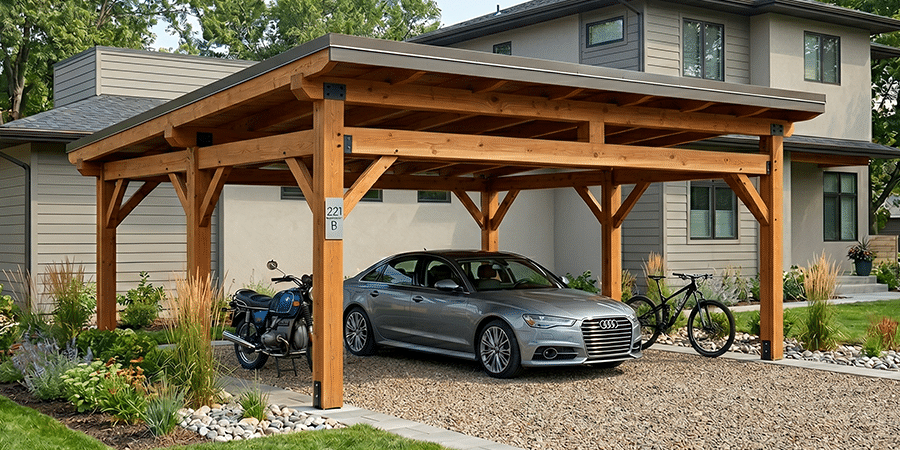
The average homeowner spends $3,000–$6,000 on a poured concrete carport slab—and still ends up with cracks within five years. That investment buys you freeze-thaw damage, pooling water, and a permanent structure you can’t relocate if your needs change.
The best carport foundation combines drainage, load distribution, and lateral confinement. A geocell ground grid system like BaseCore HD™ filled with compacted gravel provides vehicle-rated support without concrete. The honeycomb cells lock aggregate in place, preventing ruts and shifting while allowing water to drain through—ideal for DIY homeowners who want a permanent, maintenance-free carport base.
In this guide, Backyard Bases walks you through the most common carport foundation ideas, explains why most fail over time, and shows you exactly how to build a geocell carport foundation yourself in a single weekend. Whether you’re protecting a daily driver, a boat, an RV, or farm equipment, you’ll learn the engineering principles behind a foundation that actually lasts.
Why Most Carport Foundations Fail
Before choosing a carport foundation approach, you need to understand why the popular options cause problems. Every failing carport pad traces back to one or more of three engineering root causes: weak subgrade, no lateral confinement, and no water management.
Weak or Saturated Subgrade
What it looks like: Your carport posts sink unevenly into the ground. The gravel pad develops low spots where water collects. Tire tracks compress deeper each season.
The root cause: Native soil under your carport compresses unevenly under vehicle weight—especially when wet. Clay soils expand and contract with moisture. Sandy soils shift under repeated loading. Without addressing the subgrade, any foundation you place on top inherits these problems.
No Lateral Confinement
What it looks like: Gravel migrates outward from under tire paths. You see “valleys” where vehicles park and “hills” pushed to the sides. The pad needs constant re-grading.
The root cause: Loose aggregate has no structure holding it in place. When a 4,000-pound vehicle drives onto loose gravel, the stones move sideways under the load because nothing confines them laterally. This is why adding more gravel to a failing carport pad only delays the same result.
No Water Management
What it looks like: Puddles form after every rain. Mud develops around the carport edges. In winter, ice sheets form on the pad surface.
The root cause: Solid surfaces like concrete don’t absorb water—they channel it to edges where it erodes the surrounding ground. Compacted soil under gravel prevents drainage, trapping water in the aggregate layer. Without built-in drainage, water becomes your carport’s worst enemy.
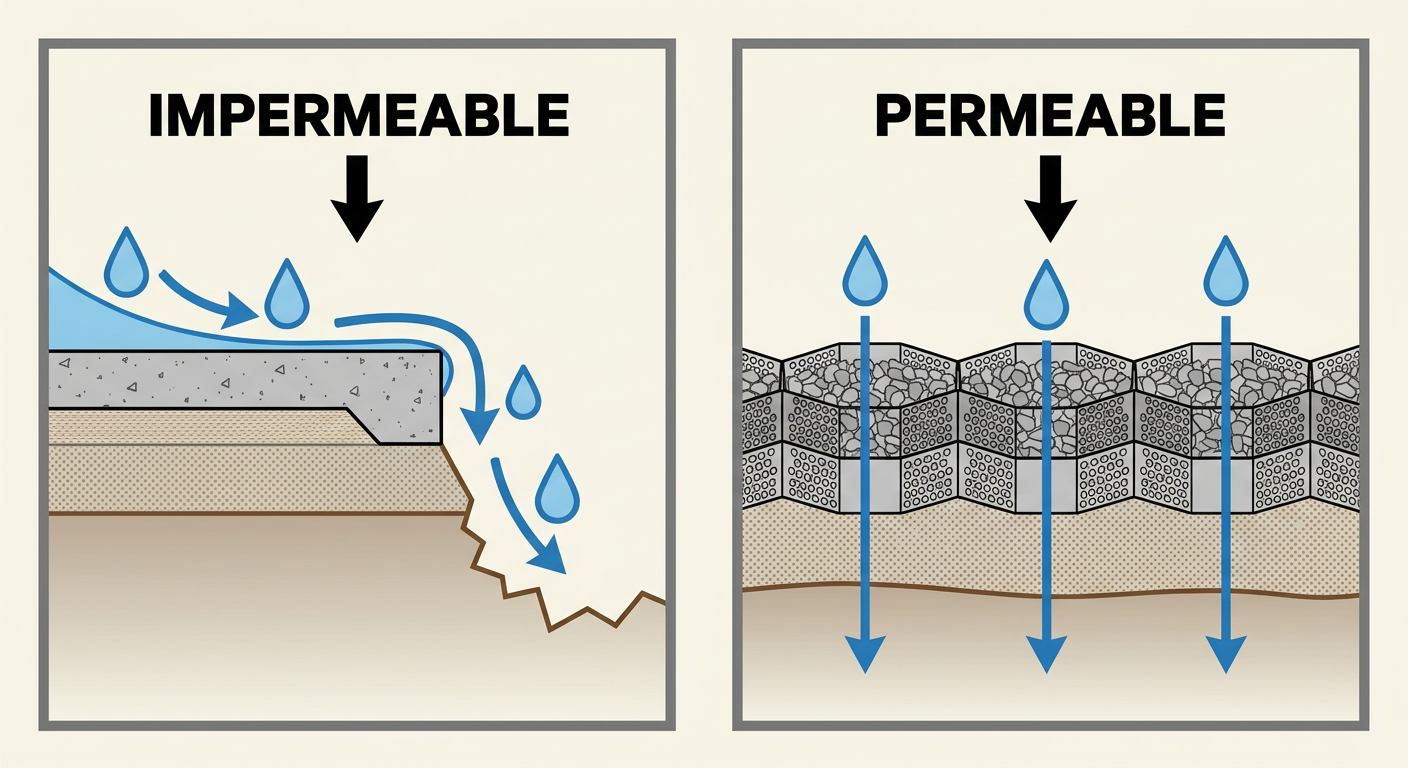
Understanding these three failure modes helps you evaluate every carport foundation idea you encounter. The right solution addresses all three simultaneously.
How Geocell Carport Foundations Solve These Problems
A geocell ground grid—specifically BaseCore HD™ for vehicle applications—addresses each root cause through a single integrated system. Here’s the engineering behind it, explained in plain terms.
Cellular Confinement Stops Lateral Migration
The honeycomb structure of BaseCore HD™ creates hundreds of individual cells, each roughly 8 inches across. When you fill these cells with compacted gravel, the aggregate locks in place. Stones can’t migrate sideways because the cell walls contain them.
This is why geocell carport pads don’t develop ruts or require re-grading. The same load that pushes loose gravel sideways simply compresses the confined aggregate tighter into its cell. The harder you load it, the more stable it becomes.
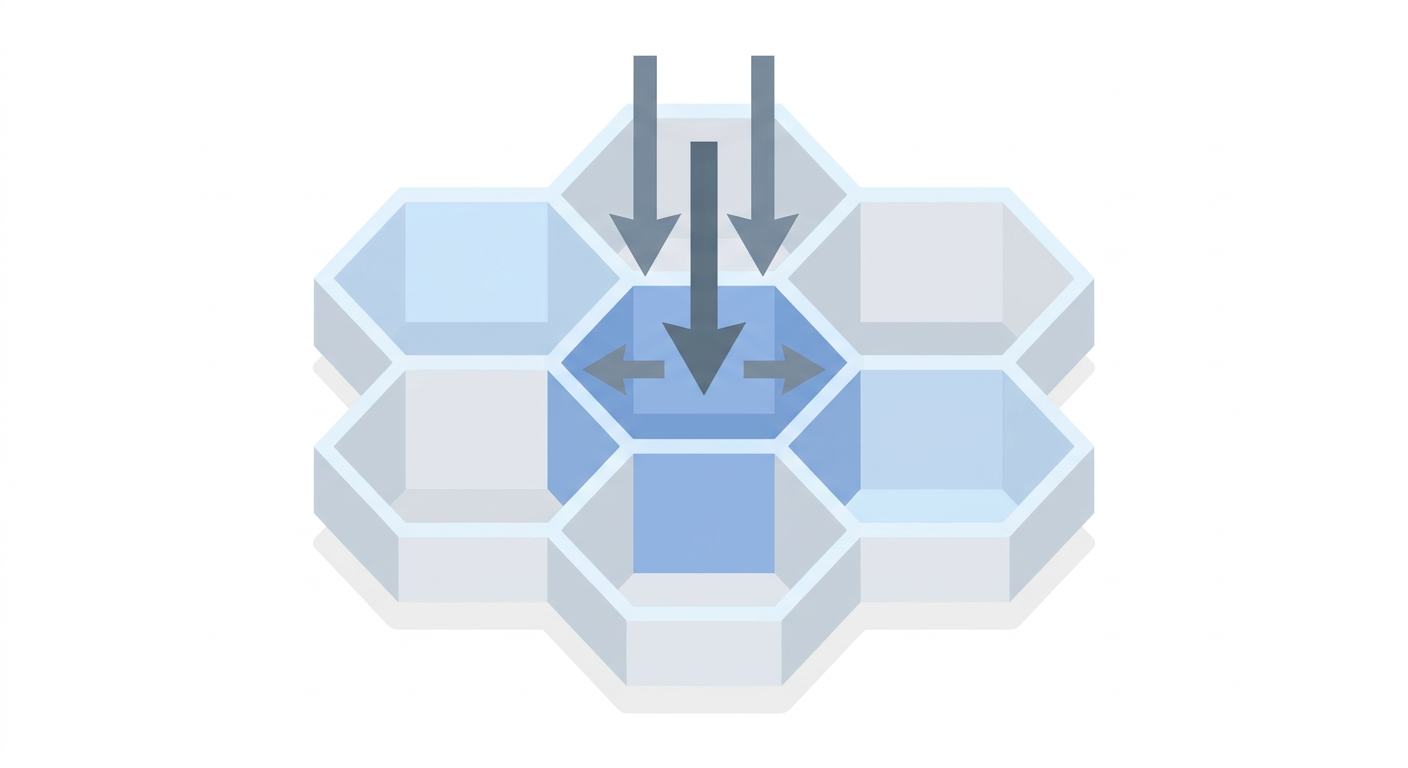
Load Distribution Protects Weak Subgrade
When a vehicle tire presses down on one cell, the rigid HDPE walls transfer that force to adjacent cells. Instead of a point load compressing directly into soft soil, the geocell spreads weight across a much larger footprint.
This bridging effect means your carport foundation performs consistently even over variable soil conditions. A soft spot that would create a sinkhole in loose gravel simply flexes slightly within the geocell system, then recovers when the load moves.
Permeable Design Manages Water
Unlike concrete, a geocell carport foundation drains vertically. Rainwater passes through the gravel, through gaps in the cell structure, and into the prepared subgrade below. When you install geotextile fabric beneath the geocell, water drains while fine soil particles stay separated from your aggregate layer.
No pooling. No ice sheets. No erosion at the edges. The carport pad itself becomes part of your property’s drainage system rather than fighting against it.
Choosing the Right Geocell Depth for Your Carport
For carports supporting passenger vehicles (cars, SUVs, light trucks), 3-inch BaseCore HD™ provides adequate load distribution. For heavier applications—RVs, boats on trailers, farm equipment, or frequent heavy truck traffic—4-inch BaseCore HD™ offers additional capacity.
The HD designation matters for vehicle applications. BaseCore HD™ uses thicker cell walls engineered for repeated vehicular loading, not just foot traffic or light storage.
Ready to build your carport foundation? Shop BaseCore HD™ carport kits at backyardbases.com or call 888-897-2224 for sizing help.
How to Build a Geocell Carport Foundation: Step-by-Step DIY Guide
This installation guide covers a standard two-car carport foundation (approximately 20′ x 20′ or 400 square feet). Adjust quantities proportionally for your project size. Most homeowners complete this project in a single weekend with basic tools.
Tools and Materials You’ll Need
Tools:
- Shovel and/or skid steer for excavation
- Rake for leveling
- Plate compactor (rent from home improvement stores, typically $80–$120/day)
- Utility knife or circular saw for trimming geocell panels
- Tape measure and stakes
- String line for layout
- Wheelbarrow
Materials from Backyard Bases:
- 3-inch or 4-inch BaseCore HD™ geocell panels (calculate coverage based on your carport footprint)
- Geotextile fabric (same square footage as your project area, plus 1-foot overlap on edges)
- BaseEdge HD steel edging for perimeter containment (optional but recommended)
Materials from local suppliers:
- Crushed angular gravel (3/4-inch minus or crusher run)—calculate approximately 1.5 tons per 100 square feet for 3-inch depth, 2 tons per 100 square feet for 4-inch depth
- Stakes or landscape staples for securing geotextile and geocell edges
Step 1: Excavate and Level the Project Area
Mark your carport footprint with stakes and string. Excavate to a depth of 4–6 inches below your desired finished grade. The exact depth depends on your geocell height (3 or 4 inches) plus a 1–2 inch sub-base if your soil drains poorly.
Remove any large roots, rocks, or debris. Grade the excavated area with a slight slope (1–2% or about 1/4 inch per foot) away from any adjacent structures to direct drainage.
Time estimate: 2–4 hours depending on soil conditions and whether you’re using hand tools or equipment.
Step 2: Compact the Subgrade
Run the plate compactor over the entire excavated area in overlapping passes. This step is critical—a compacted subgrade prevents settling and creates a stable base for your geocell system.
If your native soil is clay-heavy or poorly draining (check the USDA Web Soil Survey for your property), add a 1–2 inch layer of coarse sand or pea gravel and compact it. This drainage layer prevents water from saturating the subgrade.
Time estimate: 30–60 minutes.
Step 3: Install Geotextile Fabric
Roll out geotextile fabric over the entire compacted subgrade. Overlap seams by 6–12 inches. Extend the fabric 6–12 inches beyond your project perimeter—you’ll fold it up against the geocell edges later.
The geotextile serves two functions: it prevents fine soil particles from migrating up into your gravel (which would clog drainage and reduce stability), and it allows water to pass through into the ground below.
Common mistake to avoid: Skipping the geotextile. Without it, soil pumps up into your gravel layer over time, turning your stable carport pad into a muddy mess.
Time estimate: 20–30 minutes.
Step 4: Expand and Position the Geocell Panels
BaseCore HD™ panels ship collapsed flat for easy transport. Expand each panel into its honeycomb shape by pulling opposite corners apart. Stake the expanded panels in place temporarily to hold the shape.
Position panels to cover your entire project area. Connect adjacent panels using the interlocking edges—no special tools or fasteners required. Trim panels to fit with a utility knife or circular saw where needed.
For a clean perimeter, install BaseEdge HD steel edging around the carport boundary. This contains the gravel, provides a finished appearance, and prevents edge cells from shifting.
Time estimate: 1–2 hours.
Step 5: Fill Cells with Gravel
Shovel or dump crushed angular gravel into the geocell panels. Fill cells to slightly above the top of the cell walls (about 1/2 inch overfill). Angular gravel locks together better than rounded stone—3/4-inch minus or crusher run works best.
Spread gravel evenly across all cells. Don’t leave any cells unfilled—empty cells won’t provide load support.
Time estimate: 2–4 hours depending on gravel delivery method and project size.
Step 6: Compact the Filled Geocell
Make multiple passes with the plate compactor over the filled geocell surface. Compaction settles the gravel into the cells and locks stones together. After compaction, add additional gravel to any cells that settle below the top edge, then compact again.
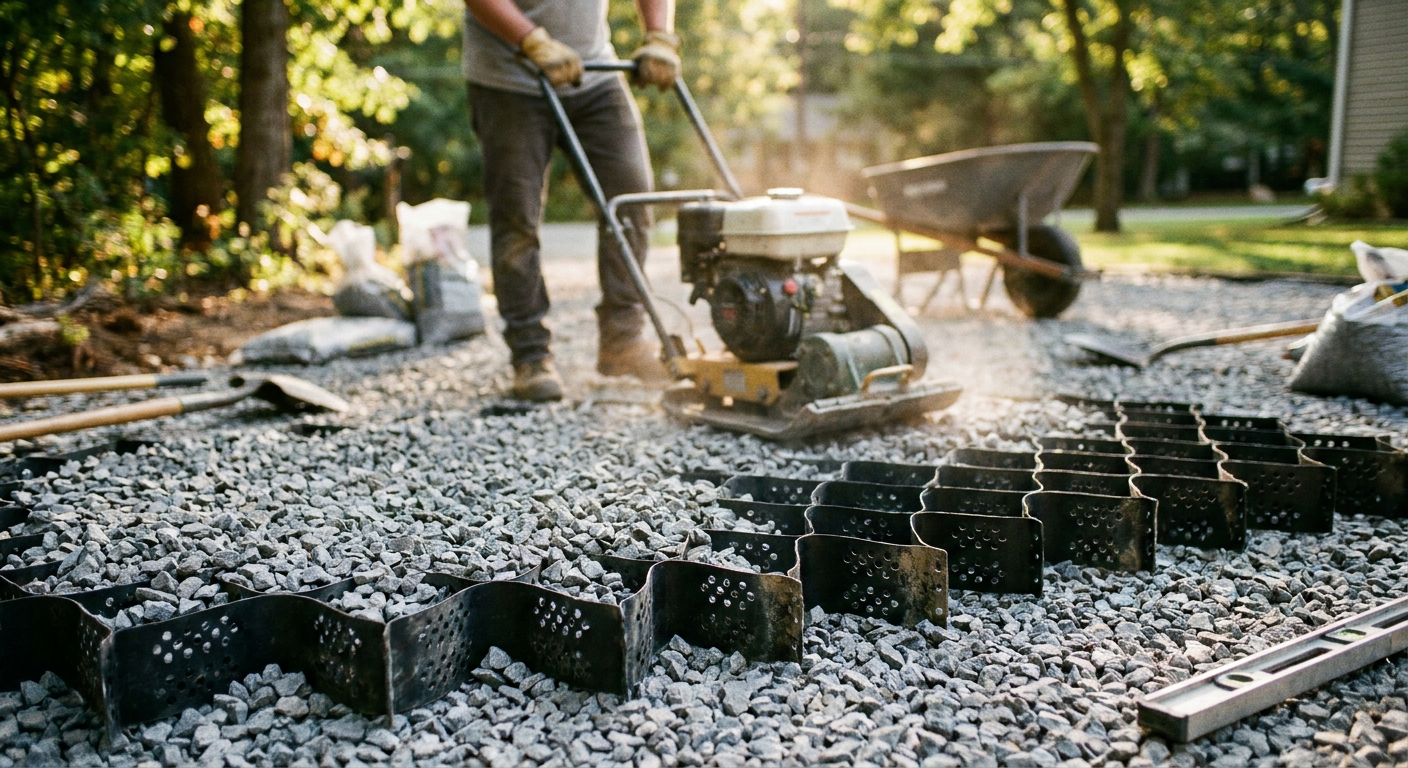
The finished surface should be flush with or slightly above the geocell wall tops. This ensures vehicles drive on a stable, confined aggregate surface.
Time estimate: 45–60 minutes.
Step 7: Install Carport Structure
With your foundation complete, install your carport posts and structure according to manufacturer instructions. For post-supported carports, you can anchor posts directly into the geocell foundation using concrete footings at post locations, or use surface-mount post bases bolted to concrete blocks set within the geocell grid.
Total project time: 8–16 hours over a weekend for a standard two-car carport pad, depending on excavation conditions and crew size.
Homeowner Questions Answered
Do I need a concrete foundation for a carport?
No—a properly installed geocell foundation provides vehicle-rated support without concrete. BaseCore HD™ filled with compacted gravel distributes vehicle weight across the entire pad, eliminates ruts, and allows drainage that concrete can’t provide. For most residential carports protecting cars, trucks, or boats, geocell outperforms concrete at a fraction of the cost.
How thick should a carport foundation be?
For passenger vehicles and light trucks, a 3-inch geocell depth provides adequate load capacity. For heavier applications like RVs, equipment trailers, or frequent heavy truck traffic, choose 4-inch BaseCore HD™. Total foundation thickness including excavation and sub-base typically runs 4–6 inches below finished grade.
Can I build a carport foundation myself?
Absolutely. The geocell carport foundation system from Backyard Bases is designed for DIY installation. The panels expand from flat to honeycomb in seconds, connect without special tools, and trim with a utility knife. Most homeowners complete a two-car carport foundation in a single weekend with basic tools and a rented plate compactor.
Comparing Carport Foundation Options
When evaluating carport foundation ideas, consider these factors across the most common approaches:
Poured Concrete Slab
- Initial cost: High ($3,000–$6,000+ for a two-car carport)
- DIY difficulty: Requires forms, rebar, mixing, finishing—most hire contractors
- Drainage: None—channels water to edges, causing erosion
- Longevity: Cracks from freeze-thaw cycles, heavy loads, settling
- Portability: Permanent—cannot be relocated
Loose Gravel Pad
- Initial cost: Low (gravel only)
- DIY difficulty: Easy to spread initially
- Drainage: Good when new, degrades as gravel compacts into mud
- Longevity: Poor—ruts within months, requires annual re-grading
- Portability: Semi-permanent but degrades
Geocell Grid with Compacted Gravel (BaseCore HD™)
- Initial cost: Moderate (between gravel-only and concrete)
- DIY difficulty: Single weekend project with basic tools
- Drainage: Excellent—designed as permeable surface
- Longevity: Decades—cellular confinement prevents migration and rutting
- Portability: Can be relocated by lifting panels
The geocell approach delivers concrete-level stability with gravel-level drainage at a price point between the two. For DIY homeowners, it’s the only option that provides professional-grade results without professional-grade costs or skills.
When to Consider Professional Help
While most carport foundations are straightforward DIY projects, certain conditions warrant consulting a contractor or engineer:
- Severe slopes: Sites with more than 10% grade may require retaining structures or terracing
- High water table: If standing water appears within 12 inches of the surface during wet seasons, additional drainage engineering may be needed
- Commercial load requirements: Heavy commercial vehicles or equipment may exceed residential geocell specifications
- Permitting requirements: Some jurisdictions require engineered drawings for carport foundations—check local building codes
For these situations, contact Backyard Bases at 888-897-2224. Our team can help you determine if the standard BaseCore HD™ system meets your needs or if a custom solution makes sense.
Conclusion
A carport foundation doesn’t require expensive concrete or constant gravel maintenance. By addressing the three root causes of foundation failure—weak subgrade, no lateral confinement, and no water management—a geocell system like BaseCore HD™ provides rock-solid, draining, rut-free support for decades.
Build your carport foundation right the first time. Order your BaseCore HD™ carport kit at backyardbases.com or call 888-897-2224 for help sizing your project.
Frequently Asked Questions
How much does a geocell carport foundation cost compared to concrete?
A geocell carport foundation typically costs 40–60% less than poured concrete when including materials and labor. DIY homeowners save additional money by eliminating contractor costs entirely. Visit backyardbases.com/order-now for current pricing on BaseCore HD™ kits sized for your project.
What type of gravel works best for a geocell carport pad?
Crushed angular gravel—specifically 3/4-inch minus or crusher run—performs best in geocell applications. The angular edges interlock within the cells, creating maximum stability. Avoid rounded river rock or pea gravel, which roll and shift under vehicle loads even when confined.
Will a geocell carport foundation work in freezing climates?
Yes. Because the BaseCore HD™ system drains water vertically rather than trapping it, there’s no water accumulation to freeze and heave. The HDPE material remains flexible in sub-zero temperatures. Geocell carport foundations perform well across all U.S. climate zones.
How long does a BaseCore HD carport foundation last?
BaseCore HD™ is manufactured from UV-stabilized HDPE designed for decades of outdoor exposure under vehicle loads. The geocell itself carries a manufacturer warranty, and properly installed foundations require no maintenance beyond occasional debris removal. Many installations outlast the carport structures they support.
Can I install a geocell carport foundation over existing concrete?
Yes—if the existing concrete is sound and drains adequately, you can overlay it with geocell and gravel to create a new finished surface. This approach also works to rehabilitate failing concrete pads without costly demolition. For specific guidance, call Backyard Bases at 888-897-2224.
This article is for informational purposes only. The guidance provided reflects Backyard Bases’ product documentation, published build guides, and general ground stabilization principles. Soil conditions, climate, drainage, and load requirements vary by property—consult Backyard Bases or a qualified contractor for site-specific recommendations. For current product information, sizing help, and pricing, visit backyardbases.com or call 888-897-2224.
