

The average homeowner spends $3,000–$6,000 on a concrete foundation for a simple backyard shed—and then watches it crack within five years. No-dig foundation solutions using geocell ground grids offer a faster, more affordable alternative that DIY homeowners can install in a single weekend without heavy equipment, permits, or concrete trucks. These cellular confinement systems lock gravel in place, distribute weight evenly, and allow water to drain naturally—solving the three core problems that cause traditional foundations to fail. This guide covers exactly why conventional approaches break down, how geocell technology from Backyard Bases addresses each failure point, and the step-by-step process to build your own stable foundation for sheds, carports, gazebos, hot tubs, driveways, and more.
Why Traditional Backyard Foundations Fail
Before diving into solutions, you need to understand what causes foundation problems in the first place. Every sinking shed, rutted driveway, and cracked concrete slab traces back to one or more of three engineering root causes.
Root Cause 1: Weak or Saturated Subgrade
The native soil underneath your project is rarely as stable as it looks. Clay soils expand when wet and shrink when dry, creating a shifting surface that moves with the seasons. Sandy soils drain well but compress unevenly under concentrated loads. According to the USDA Natural Resources Conservation Service, soil conditions vary dramatically even within a single property—what works in your front yard may fail completely in the back corner where water collects.
Concrete slabs sit directly on this unstable base. When the soil underneath shifts or compresses, the rigid concrete can’t flex—it cracks. Once water enters those cracks, freeze-thaw cycles accelerate the damage. That $5,000 foundation becomes a crumbling liability within a decade.
Root Cause 2: No Lateral Confinement
Loose gravel seems like an obvious budget alternative to concrete. You dump a few tons, rake it flat, and call it done. The problem appears the first time something heavy sits on top. Without anything holding it in place, gravel migrates sideways under load. Vehicle tires push it toward the edges. Heavy structures compress it downward while the stones escape horizontally.
The result is the classic gravel failure pattern: depressions where you park or walk, raised berms along the edges, and eventually bare dirt showing through the middle. Most homeowners respond by adding more gravel—which migrates the same way, creating an expensive annual maintenance cycle that never actually solves the problem.
Root Cause 3: No Water Management
Water is the hidden destroyer of backyard projects. Concrete is impermeable, so rainwater runs off the surface and pools at the edges—exactly where your foundation meets the soil. That concentrated moisture softens the subgrade, creating voids underneath the slab. Pair this with the freeze-thaw cycle in northern climates, and you get heaving, cracking, and eventual structural failure.
Loose gravel drains better than concrete but creates its own water problems. Without proper subgrade separation, fine soil particles migrate upward through the gravel during wet conditions—a process called pumping. Your clean gravel base gradually turns into a muddy mess that holds water instead of draining it. If you’ve ever wondered how to fix a muddy yard, this is often the root cause.
How Geocell No-Dig Foundations Solve All Three Problems
BaseCore™ geocell systems address each failure point through a single engineered product. Understanding why this works helps you see why this isn’t just another DIY hack—it’s proven technology used in civil engineering applications from highway construction to military installations.
Cellular Confinement Eliminates Lateral Migration
A geocell is essentially a honeycomb grid made from high-density polyethylene (HDPE). Each cell measures approximately 8 inches across and expands from a compact bundle into a panel covering 64 square feet. When you fill these cells with gravel, something mechanical happens: the aggregate becomes locked in place.
Under load, gravel naturally wants to shift sideways. But the cell walls block that movement, forcing the load to distribute downward and outward across a much larger area. According to research published by the Geosynthetic Institute, cellular confinement increases the load-bearing capacity of granular fill by 2–3 times compared to unconfined aggregate.
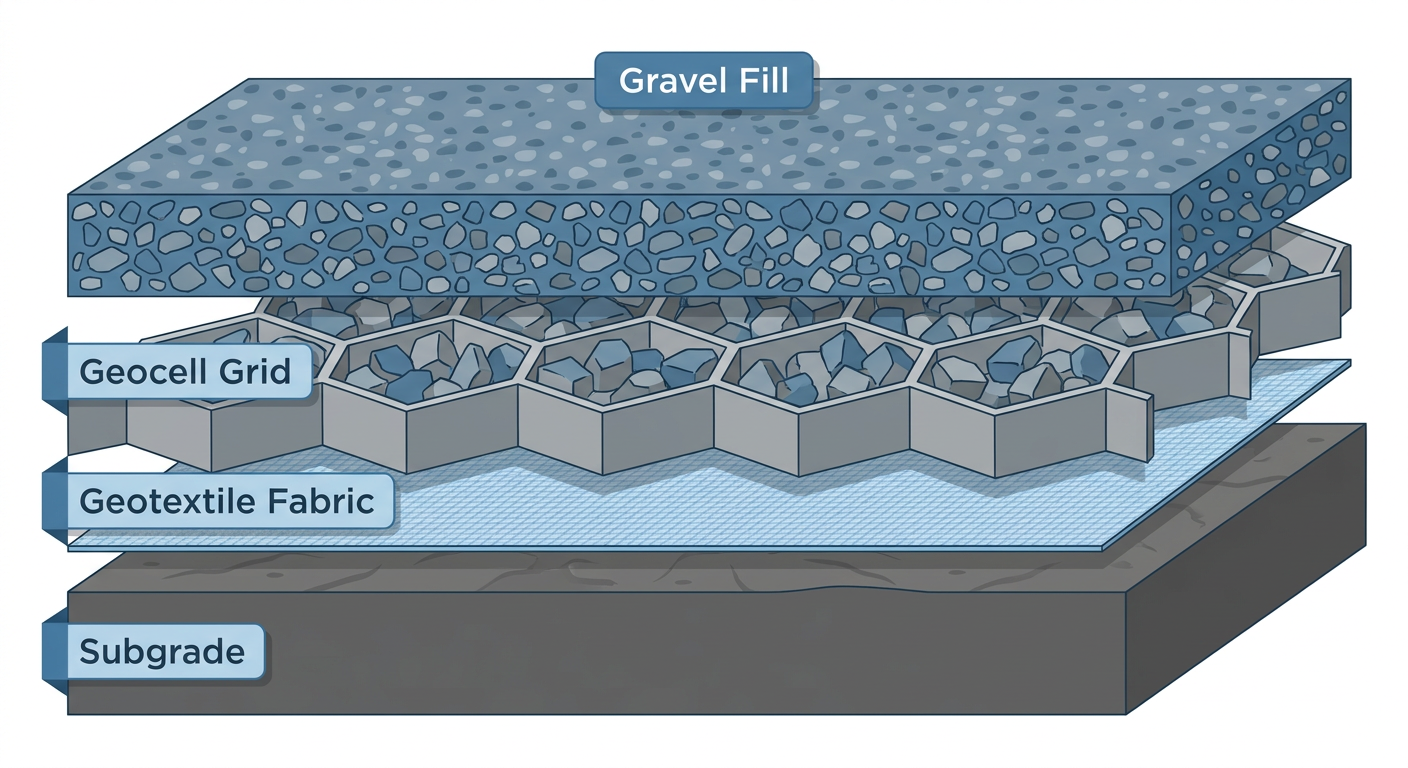
This is why a 3-inch depth of gravel inside BaseCore™ for driveways can handle vehicle traffic that would destroy the same depth of loose gravel within months. The cells do the structural work; the gravel provides the mass.
Load Distribution Protects the Subgrade
When weight hits the top of a geocell foundation, it doesn’t concentrate at a single point. Instead, the rigid cell walls transfer that force horizontally to adjacent cells, which transfer it to their neighbors. By the time the load reaches the subgrade, it’s spread across an area many times larger than the original contact point.
This dramatically reduces the pressure on your native soil. A shed that would sink into soft ground when sitting on bare gravel stays level when supported by a geocell grid. The subgrade may still be weak—but it doesn’t have to be strong when the foundation above it distributes the load so effectively.
Permeability Plus Separation Manages Water
Unlike concrete, geocell foundations are 100% permeable. Rainwater passes straight through the gravel fill and into the ground below. No pooling. No runoff concentration. No freeze-thaw damage at the edges.
But permeability alone isn’t enough—you also need separation between your gravel and the soil beneath. That’s why every geotextile fabric installation matters. This woven or non-woven layer goes down before the geocell, preventing fine soil particles from pumping up into your gravel while still allowing water to drain through. It’s the difference between a foundation that stays clean for decades and one that turns to mud within a few seasons.
Ready to skip the concrete and build a foundation that actually lasts? Shop BaseCore™ geocell kits at Backyard Bases or call 888-897-2224 for help sizing your project.
Where No-Dig Geocell Foundations Work Best
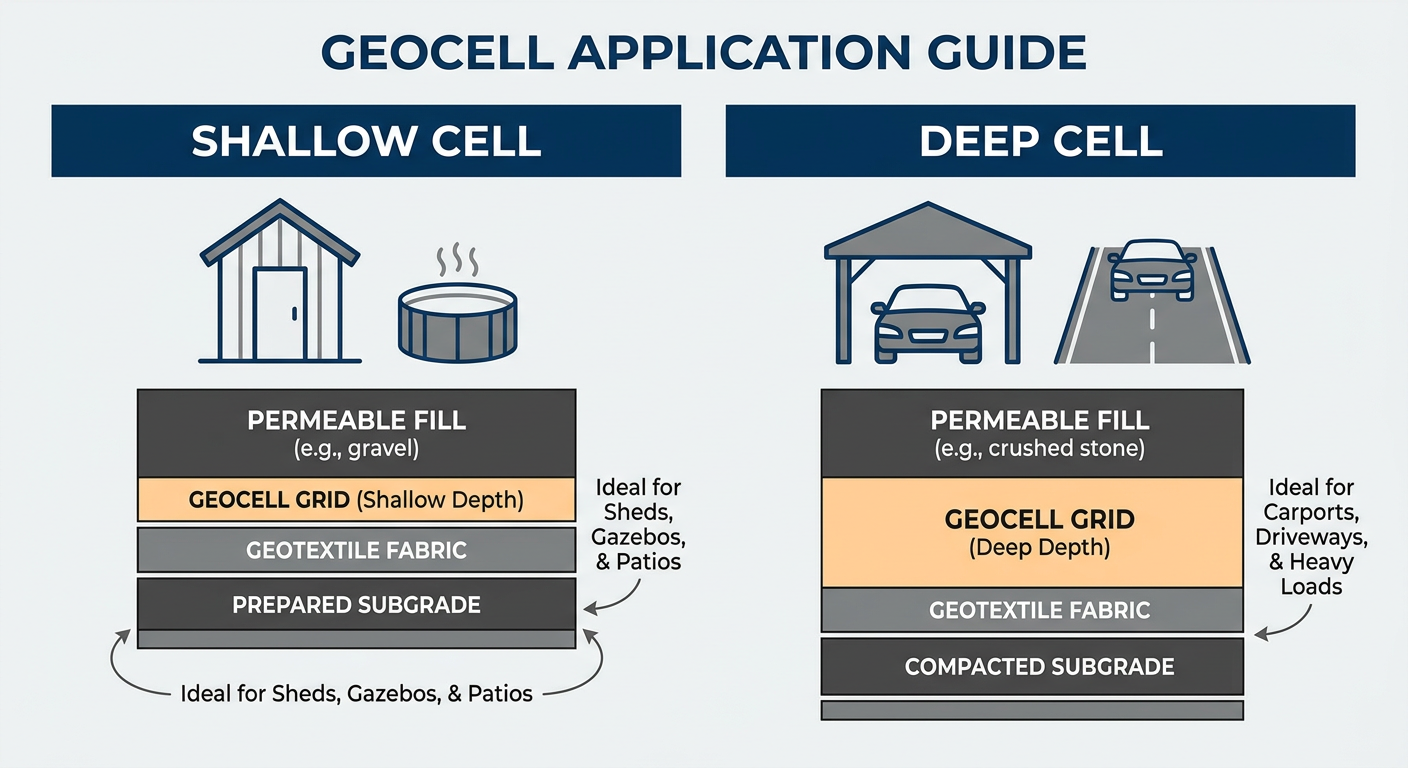
Geocell technology handles a surprisingly wide range of backyard applications. The key variable is depth: lighter loads need shallower cells, while heavier loads and vehicle traffic require deeper systems.
Application Recommended Geocell Depth Typical Use Case Sheds 2–3 inches Storage sheds, garden sheds, tool sheds up to 12×16 feet Gazebos 2–3 inches Freestanding gazebos, pergolas, outdoor kitchens Hot Tubs 3–4 inches Spas weighing 3,000–6,000 lbs when filled Carports 3–4 inches Single and double carports, covered parking Driveways 3–4 inches (HD recommended) Residential driveways with regular vehicle traffic Parking Pads 3–4 inches (HD recommended) RV pads, boat trailer storage, overflow parking Farm Applications 4–6 inches (HD recommended)Equipment pads, barn foundations, livestock areas
The “HD” designation refers to BaseCore HD™, which features thicker cell walls and reinforced welds for applications involving vehicle traffic or heavier concentrated loads. For pedestrian-only projects like shed bases or gazebo pads, standard BaseCore™ provides all the stability you need at a lower cost.
Step-by-Step: How to Build a No-Dig Geocell Foundation
The installation process is straightforward enough that most homeowners complete it in a single weekend. Here’s the complete procedure using a 10×12-foot shed base as the example—scale up or down based on your project dimensions.
Tools and Materials Needed
- BaseCore™ geocell panels (calculate coverage at Backyard Bases’ foundation calculator)
- Geotextile fabric (sized to extend 6–12 inches beyond your geocell area)
- Steel landscape edging (optional but recommended for clean borders)
- Crushed angular gravel, ¾-inch minus (approximately 1 ton per 60 square feet at 3-inch depth)
- Landscape stakes or ground anchors
- Shovel, rake, and wheelbarrow
- Level (4-foot preferred)
- Plate compactor (rental) or hand tamper
- Utility knife for trimming geocell to size
Step 1: Prepare the Site (1–2 Hours)
Mark your foundation footprint using string lines and stakes. For a shed, extend the prepared area 6–12 inches beyond the shed’s dimensions on all sides—this creates a stable perimeter and prevents edge erosion.
Remove all vegetation, roots, and organic debris from the marked area. You don’t need to excavate deeply; removing the top 2–3 inches of topsoil is usually sufficient. The goal is a relatively firm, flat surface. Fill any low spots with compacted fill material.
Step 2: Grade and Compact the Subgrade (30–60 Minutes)
Use a rake to create a slight slope (1–2% grade, or about ¼ inch per foot) away from any adjacent structures. This ensures surface water flows away from your building.
Compact the exposed subgrade with a plate compactor or hand tamper. Even soft soils benefit from this step—it identifies and fills soft spots before you build on top of them. Make two passes in perpendicular directions.
Step 3: Install Geotextile Fabric (15–30 Minutes)
Roll out geotextile fabric across the entire prepared area. Overlap seams by at least 6 inches. The fabric should extend to the edges of your excavation—it will be trimmed or folded after the geocell is filled.
This layer is not optional. Skipping geotextile is the most common DIY mistake, and it leads to the exact mud-mixing problem that ruins gravel bases over time. The fabric costs a fraction of the total project and saves years of maintenance headaches.
Step 4: Expand and Secure the Geocell Grid (30–45 Minutes)
BaseCore™ ships in compact bundles. To install, simply stretch each panel to its full expanded size (approximately 8×8 feet per standard panel). The cells will open into a honeycomb pattern.
Lay panels edge-to-edge across your fabric-covered area. Connect adjacent panels using the built-in locking tabs or zip ties. For permanent installations, secure the outer edges using landscape stakes driven through the cell walls at 2–3 foot intervals.
If your project area isn’t a perfect rectangle, trim the geocell to fit using a utility knife. The HDPE material cuts easily, and partial cells along edges still provide significant stabilization.
Step 5: Fill with Angular Gravel (2–4 Hours)
This is the most labor-intensive step. Shovel or dump crushed angular gravel into each cell, filling slightly above the cell tops. Angular gravel (crushed stone with sharp edges) locks together better than rounded river rock—this interlock is what makes the system work.
Recommended gravel specs: ¾-inch minus crushed stone, limestone, or granite. Avoid pea gravel, river rock, or any rounded aggregate. For quantity estimation, plan on approximately 100 pounds of gravel per square foot at 3-inch depth, or roughly 1 ton per 60 square feet.
Step 6: Compact and Level (30–45 Minutes)
Run a plate compactor over the filled geocell, making at least two passes in perpendicular directions. This seats the gravel firmly into the cells and creates a flat, stable surface. Check for level as you go and add gravel to any low spots.
After compacting, the gravel surface should sit flush with or slightly below the cell tops. Add a thin finishing layer if you want a cleaner appearance, or leave it as-is—the exposed cell edges actually help prevent edge erosion.
Step 7: Install Edge Restraint (Optional, 30–60 Minutes)
For the cleanest installation, border your geocell foundation with steel landscape edging. This holds the gravel in place along exposed edges and creates a professional-looking transition to your lawn or landscaping.
Steel edging is especially important for driveways and parking pads where vehicle tires might otherwise push gravel over the edge. For shed bases surrounded by lawn, it’s optional but recommended for aesthetics.
Do I Need a Permit for a No-Dig Foundation?
In most jurisdictions, geocell foundations for accessory structures like sheds, carports, and gazebos do not require building permits because no concrete is poured and no permanent excavation occurs. However, permit requirements vary significantly by location. Structures over certain size thresholds—often 120 or 200 square feet depending on local codes—may require permits regardless of foundation type.
Always check with your local building department before starting. The International Residential Code (IRC) provides baseline standards, but your municipality may have stricter or more lenient requirements. If a permit is required, the geocell foundation typically simplifies approval since it doesn’t involve footings, rebar, or concrete inspections.
How Long Does a Geocell Foundation Last?
BaseCore™ geocells are manufactured from high-density polyethylene (HDPE), the same material used in underground drainage pipes rated for 50–100 year lifespans. The cells themselves don’t degrade from UV exposure when buried under gravel, and HDPE is immune to rust, rot, and insect damage.
The limiting factor is usually the gravel fill, not the geocell. Over decades, heavy traffic can cause some aggregate breakdown, requiring occasional top-dressing with fresh stone. For pedestrian-only applications like shed foundations, expect virtually maintenance-free performance for the life of the structure above.
Is a Geocell Foundation Cheaper Than Concrete?
In almost every case, yes—often dramatically so. A typical 10×12-foot concrete slab runs $1,200–$2,500 for professional installation, plus permitting costs and a 2–3 week cure time before you can build on it. The same footprint in geocell costs significantly less in materials, requires no permits in most areas, and is ready for use immediately after installation.
More importantly, geocell foundations are DIY-friendly while concrete is not. Pouring, finishing, and curing a concrete slab requires specialized skills and tools. Making a single mistake means living with a cracked, uneven surface for decades. Geocell installation is forgiving—if you don’t like how something looks, you can lift the grid, adjust, and re-fill.
For detailed comparisons on specific applications, see the geocell vs gravel driveway cost comparison or explore the project gallery for real installation examples.
Common Questions About No-Dig Foundation Solutions
Can I install a geocell foundation on a slope?
Yes, geocell works on moderate slopes up to about 15% grade. The cells actually help with slope stabilization by preventing gravel migration downhill. For steeper slopes, terracing with multiple level sections may be necessary. Install the cells perpendicular to the slope direction and secure all edges with stakes.
What type of gravel works best in geocell foundations?
Crushed angular stone in the ¾-inch minus size range provides the best performance. The angular edges interlock inside the cells, creating a rigid mass that resists shifting. Avoid rounded gravel like pea stone or river rock—these roll against each other instead of locking together, significantly reducing load-bearing capacity.
How do I know which geocell depth I need?
Match the depth to your expected load. For pedestrian traffic and light structures like sheds or gazebos, 2-inch geocell is typically sufficient. For vehicle traffic on driveways and parking pads, 3–4 inch depth with BaseCore HD™ is recommended. Heavy equipment or commercial applications may need 6-inch depth. Use the foundation calculator for project-specific recommendations.
Build Your No-Dig Foundation This Weekend
The concrete-or-nothing approach to backyard foundations is outdated and expensive. No-dig solutions using BaseCore™ geocell systems address every root cause of foundation failure—weak subgrade, lateral migration, and poor drainage—in a single product that any homeowner can install without specialized skills.
Whether you’re building a shed base, stabilizing a gravel driveway, or creating a level pad for a hot tub, the process is the same: prepare, fabric, grid, fill, compact. One weekend of work creates a foundation that outlasts concrete at a fraction of the cost.
Ready to start your project? Order your BaseCore™ kit online or call Backyard Bases at 888-897-2224 for personalized sizing recommendations.
Frequently Asked Questions
Can I put a geocell foundation directly on grass?
No—always remove vegetation and topsoil first. Grass and roots will decompose underneath the foundation, creating voids that cause settling. Clear the area down to mineral soil and install geotextile fabric before laying the geocell grid.
How much weight can a BaseCore™ geocell foundation support?
A properly installed BaseCore™ foundation supports thousands of pounds when filled with compacted angular gravel. The specific capacity depends on geocell depth, gravel quality, and subgrade conditions. Standard 3-inch BaseCore HD™ handles passenger vehicles; 4–6 inch depth handles heavier loads like RVs and equipment.
Will frost heave damage a geocell foundation?
Geocell foundations resist frost heave better than concrete because they’re flexible and permeable. Water drains through rather than pooling at edges, reducing ice lens formation. In severe frost climates, extending the gravel depth below the frost line provides additional protection.
Do I need to remove my geocell foundation to relocate my shed?
No—the geocell base stays in place and can support a different structure or be converted to a patio or parking area. Unlike concrete, which requires demolition, a geocell foundation is a permanent site improvement that adapts to future uses.
Can I install pavers on top of a geocell foundation?
Yes. Geocell creates an excellent permeable paver base that prevents settling and allows drainage. Fill the cells with compacted gravel, add a thin layer of leveling sand on top, and install your pavers. This approach eliminates the concrete sub-slab that traditional paver installations require.
This article is for informational purposes only. The guidance provided reflects Backyard Bases’ product documentation, published build guides, and general ground stabilization principles. Soil conditions, climate, drainage, and load requirements vary by property—consult Backyard Bases or a qualified contractor for site-specific recommendations. For current product information, sizing help, and pricing, visit backyardbases.com or call 888-897-2224.
