

The average homeowner spends between $3,000 and $6,000 on a professional patio installation—yet within five years, many of those patios develop cracked pavers, uneven surfaces, and drainage problems that require costly repairs. The root cause isn’t the pavers themselves. It’s the foundation underneath.
A backyard hardscape foundation built with geocell ground grids solves the three core failure points—weak subgrade, aggregate migration, and poor drainage—by locking fill material into a honeycomb structure that distributes weight evenly and allows water to pass through. BaseCore™ geocell systems from Backyard Bases give DIY homeowners a way to build patios, pathways, sitting areas, and outdoor living spaces that stay level and stable for decades—without pouring concrete or hiring a contractor.
This guide covers why traditional hardscape bases fail, how geocell technology addresses each failure point, and a complete step-by-step installation process you can complete in a single weekend.
Why Traditional Hardscape Foundations Fail
Walk through any established neighborhood and you’ll spot the symptoms: patio pavers that have shifted into a wavy pattern, pathway stones sinking into low spots, and gravel borders that have migrated into the lawn. These visible problems trace back to three engineering failures that most DIY tutorials and even some professional installers overlook.
Weak or Saturated Subgrade
Your native soil is the foundation of your foundation. Clay-heavy soils expand when wet and contract when dry, creating a seasonal heaving cycle that pushes pavers out of alignment. Sandy soils drain well but compress unevenly under point loads. Organic-rich topsoil holds moisture and decomposes over time, creating voids.
Most DIY patio guides tell you to compact the subgrade and add a few inches of gravel. This works temporarily—until the first heavy rain saturates the soil layer, the compacted gravel settles into the softened subgrade, and your level patio develops low spots where water pools.
No Lateral Confinement
Loose aggregate—whether crushed stone, pea gravel, or decomposed granite—wants to move sideways under pressure. When you place a heavy planter on a gravel patio base, the aggregate beneath it pushes outward like sand under your feet at the beach. Over time, this lateral migration creates the uneven surfaces and sunken areas you see in aging hardscapes.
Traditional edge restraints address this partially by holding the perimeter, but they do nothing to prevent internal aggregate migration within the base layer itself.
Poor Water Management
Water is the silent destroyer of backyard hardscapes. Surface water that can’t drain creates puddles, encourages moss growth, and accelerates freeze-thaw damage in colder climates. Subsurface water that gets trapped under pavers saturates the base layer and softens the subgrade—restarting the whole failure cycle.
Concrete foundations, while strong, create impermeable surfaces that force water to sheet-flow toward structures, landscaping, and neighbors’ properties. According to the EPA’s stormwater management guidelines, impervious surfaces contribute significantly to urban flooding and groundwater depletion.
How Geocell Ground Grids Solve Hardscape Foundation Problems
Geocell technology was originally developed for military applications—stabilizing soft ground so heavy vehicles could cross terrain that would otherwise be impassable. The same engineering principle that supports tank traffic works even better for backyard patios, pathways, and outdoor living spaces.
BaseCore™ and BaseCore HD™ geocells consist of interconnected HDPE cells that expand into a honeycomb pattern. When filled with aggregate, each cell becomes a confined column of material that can’t spread sideways. The result is a foundation that acts more like interlocking concrete blocks than loose gravel—but remains fully permeable and easy to install.
Cellular Confinement Prevents Aggregate Migration
The honeycomb cell walls physically prevent your base material from shifting laterally. When weight presses down on one cell, the aggregate can’t push into neighboring cells because the vertical walls contain it. This is the same principle that makes a cardboard egg carton support far more weight than a flat sheet of cardboard.
For hardscape foundations, this means your patio or pathway base stays uniformly compacted across the entire surface. No rutting under heavy furniture. No low spots developing over time. The geocell permeable paver base approach maintains its original grade for decades rather than seasons.
Load Distribution Protects the Subgrade
Each geocell works as a load-bearing unit that spreads concentrated forces across a wider area before they reach the native soil. Research from the Federal Highway Administration’s geotechnical division confirms that cellular confinement systems can increase the effective bearing capacity of weak soils by 400% or more.
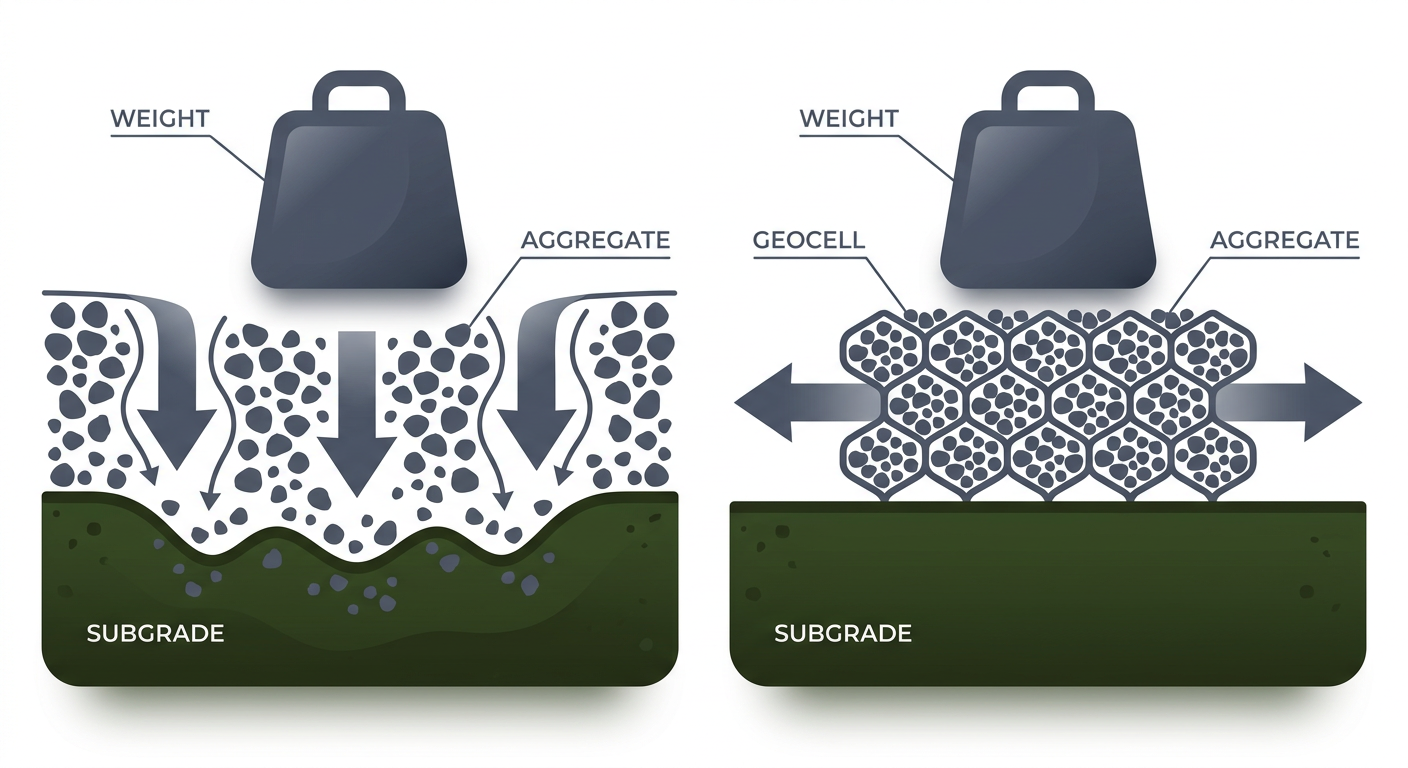
Geocell technology prevents vertical pressure from creating deep ruts by spreading weight across the interconnected honeycomb structure.
For a patio supporting a heavy hot tub or a pathway receiving regular wheelbarrow traffic, this load distribution means you can build on soil conditions that would require expensive excavation and gravel replacement with a traditional approach.
Permeability Manages Water Naturally
Unlike concrete, a geocell-based foundation allows water to drain directly through the base layer and into the soil below. Surface water from rain or irrigation filters down through the aggregate fill, preventing puddles and the saturated subgrade conditions that cause settling.
This permeability also makes geocell foundations ideal for permeable paver installations where stormwater management is a design priority—increasingly important as municipalities adopt stricter runoff regulations.
Ready to build a hardscape foundation that lasts? Shop BaseCore™ geocell kits at backyardbases.com/order-now or call 888-897-2224 for help sizing your project.
Step-by-Step: Building a Geocell Hardscape Foundation
This installation process works for patios, pathways, sitting areas, outdoor kitchens, and any hardscape surface up to light vehicle traffic. The same basic steps apply whether you’re laying flagstone, pavers, or simply creating a decorative gravel surface. A typical 200-square-foot patio takes one person a full weekend; two people can complete it in a single day.
Tools and Materials Needed
- BaseCore™ geocell panels (2″ depth for pedestrian-only surfaces; 3″–4″ for areas that may see occasional vehicle traffic or heavy loads)
- Geotextile fabric to separate base from subgrade
- Steel landscape edging for clean borders
- Crushed angular aggregate (¾″ minus or similar)
- Landscape stakes or ground staples
- Shovel, rake, and wheelbarrow
- Plate compactor (available at most equipment rental centers)
- String line and stakes for layout
- Utility knife or shears for trimming geocell panels
Step 1: Excavate and Prepare the Subgrade
Mark your patio or pathway outline with string lines and stakes. Excavate 4–6 inches below your desired finished surface height, accounting for geocell depth plus paver or surface material thickness. Remove any organic material, roots, and large rocks.
Compact the exposed subgrade with a plate compactor. This doesn’t need to be perfect—the geocell will handle remaining inconsistencies—but compacting now prevents significant future settling.
Step 2: Install Geotextile Fabric
Roll out geotextile fabric across the entire excavated area, extending 6 inches beyond the edges on all sides. Overlap seams by at least 12 inches. The fabric prevents fine soil particles from migrating up into your aggregate fill while still allowing water to drain downward.
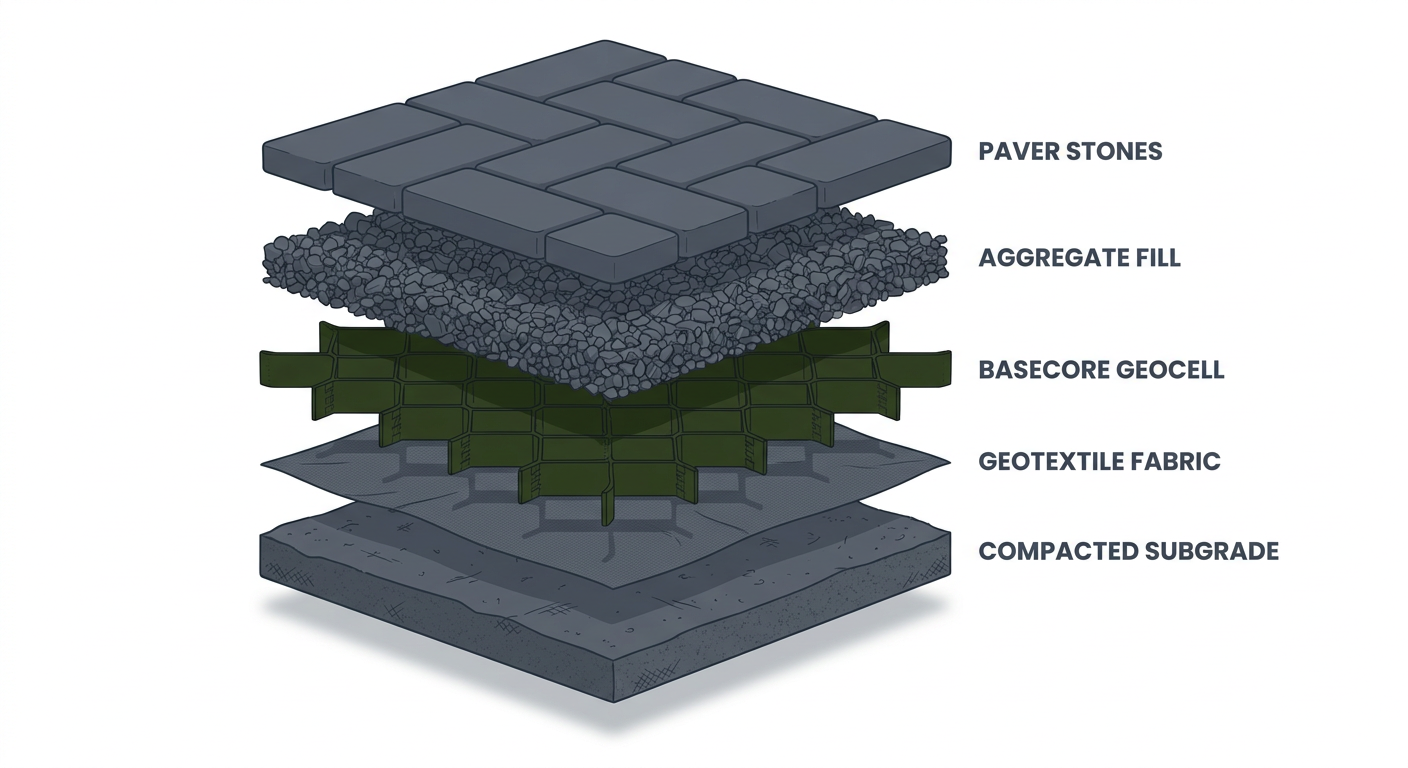
A properly layered geocell foundation ensures long-term stability and drainage.
Secure the fabric with landscape staples every 3 feet along edges and seams to prevent shifting during the next steps.
Step 3: Expand and Position Geocell Panels
BaseCore™ panels arrive compressed for shipping. Expand each panel by pulling the cells apart until they lock into the honeycomb pattern. Position panels with cell walls perpendicular to the primary traffic direction for maximum load distribution.
Connect adjacent panels using the integrated connection points—no additional fasteners required. Trim panels to fit curves and borders with a utility knife or heavy-duty shears. Stake corners and edges to hold panels in position during filling.
Step 4: Fill Cells with Aggregate
Use crushed angular aggregate (¾″ minus is ideal) to fill each cell. Angular material locks together better than rounded gravel, creating a more stable base. Overfill cells by approximately ½ inch to allow for compaction.
For a 200-square-foot patio with 3″ geocell depth, plan for approximately 2.5–3 tons of aggregate. Your local landscape supply company can help calculate exact quantities based on your specific project dimensions.
Step 5: Compact the Filled Base
Run a plate compactor across the entire surface in overlapping passes. The aggregate will settle into the cells and lock together. Add more aggregate to any low spots and compact again.
Check for level using a long straightedge—the surface should be uniformly flat with no depressions greater than ¼ inch. This compacted geocell base is now ready for your surface material.
Step 6: Install Surface Material
For pavers: Add a 1-inch layer of coarse sand as a setting bed, screed flat, and lay pavers in your chosen pattern. Fill joints with polymeric sand and compact lightly.
For flagstone: Set stones directly on the compacted aggregate base using additional crushed stone or stone dust as leveling material beneath each piece.
For gravel patios: The compacted geocell base is your finished surface. Add a ½-inch decorative gravel layer if desired.
Common Mistakes to Avoid
- Skipping geotextile fabric: Without the separation layer, soil fines migrate upward and weaken the base over 2–3 years
- Using rounded gravel fill: Pea gravel and river rock don’t interlock—use angular crushed stone for stability
- Under-compacting: Insufficient compaction leads to settling after the first heavy rain
- Ignoring drainage: Even permeable bases need positive slope (1–2% minimum) to move water away from structures
Do I Need a Geocell Base for a Small Patio?
Yes, geocell foundations benefit patios of all sizes because the three failure causes—weak subgrade, aggregate migration, and poor drainage—affect small projects just as much as large ones. A 10×10 patio without lateral confinement will still develop uneven surfaces over time as the base material shifts under furniture and foot traffic.
The practical advantage for small patios is installation speed. A single BaseCore™ panel expands to cover 64 square feet, meaning most small patios require just 2–3 panels and a few hours of work.
Can Geocells Support Heavy Loads Like Hot Tubs?
Absolutely. BaseCore HD™ geocells in 3–4 inch depths are specifically designed for concentrated heavy loads. A filled hot tub can weigh 5,000 pounds or more, but that weight distributes across the entire footprint when the base is properly designed.
The hot tub foundation guide covers specific sizing and installation details for this application. The key is using the heavier-duty HD panels and ensuring adequate depth for your specific hot tub weight.
How Does a Geocell Base Compare to Poured Concrete?
The comparison depends on your priorities:
Factor Geocell Foundation Poured Concrete Installation DIY-friendly, no specialized equipment Requires forms, mixing, finishing skills Drainage Fully permeable Impermeable, requires separate drainage Maintenance No cracking, no sealing needed Cracks over time, needs periodic sealing Freeze-thaw performance Flexible, tolerates ground movement Rigid, cracks with frost heaving Removal/modification Easy to reconfigure Requires jackhammer and disposal Cost Lower material and labor cost Higher, especially if hiring contractor
For most backyard hardscape applications, geocells offer better long-term value while avoiding the cracking and drainage problems that plague concrete installations.
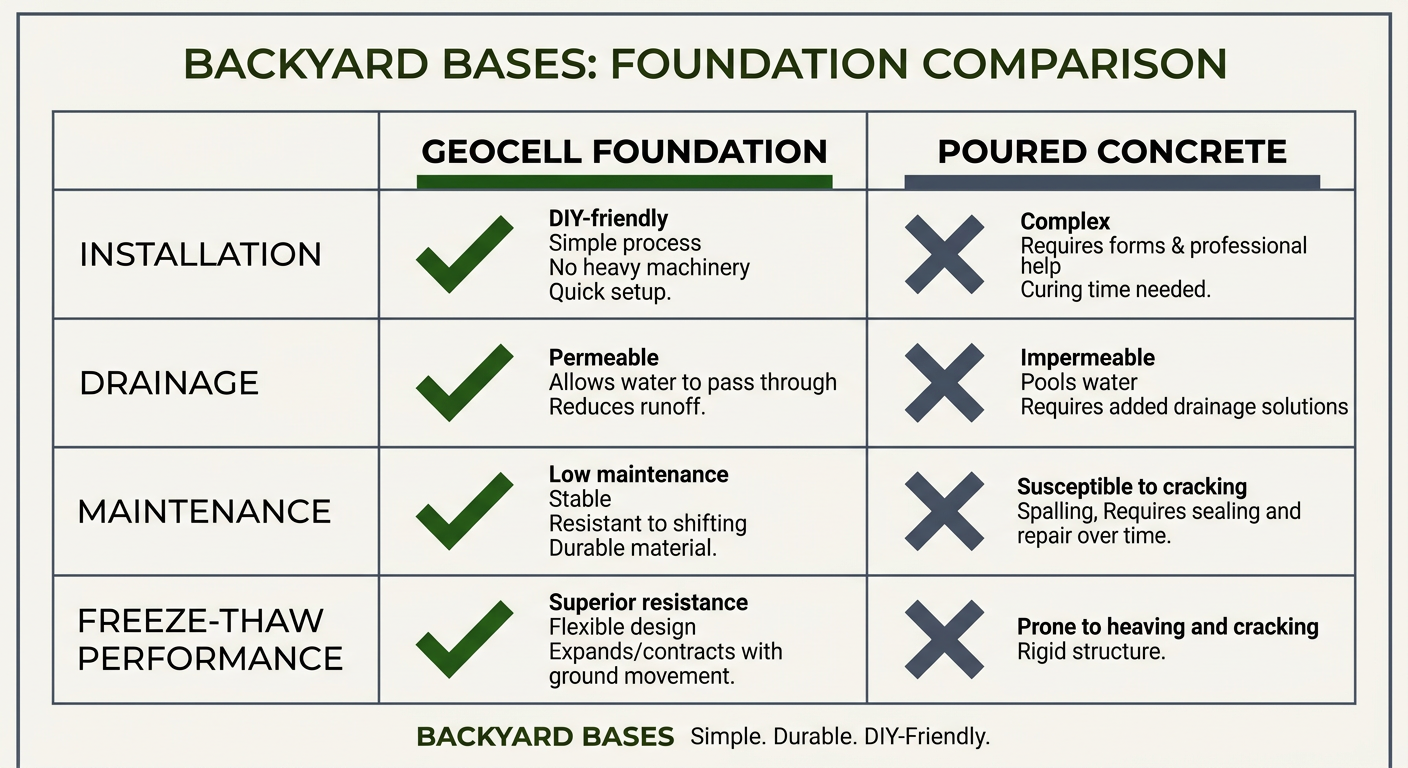
Comparing the performance and installation benefits of geocell bases against traditional concrete.
Choosing the Right Geocell Depth for Your Project
Geocell depth selection depends on the loads your hardscape will support and your soil conditions:
- 2-inch depth: Pathways, garden borders, decorative gravel areas, and light pedestrian traffic
- 3-inch depth: Patios, sitting areas, hot tub bases, and surfaces that may occasionally support heavy furniture or equipment
- 4-inch depth: Driveway extensions, RV pads, heavy load areas, or projects on particularly weak soil
The foundation calculator can help determine exact panel quantities and depth recommendations based on your project dimensions and intended use.
Conclusion
Backyard hardscape foundations fail when they can’t manage soil weakness, aggregate movement, and water drainage. Geocell ground grids address all three problems in a single DIY-friendly system that you can install in a weekend without concrete, heavy equipment, or specialized skills.
Build your patio, pathway, or outdoor living space on a foundation that stays level and stable for decades. Order your BaseCore™ geocell kit at backyardbases.com/order-now or call 888-897-2224 for personalized sizing help.
Frequently Asked Questions
How thick should my geocell base be for a patio?
For most patios with standard foot traffic and outdoor furniture, a 3-inch BaseCore™ geocell depth provides adequate load distribution and stability. Use 2-inch depth for purely decorative pathways and 4-inch depth for heavy loads like hot tubs or areas on weak clay soils.
What type of gravel works best in geocell foundations?
Crushed angular aggregate in ¾-inch minus sizing works best because the sharp edges interlock within the cells, creating a stable mass. Avoid rounded gravel like pea gravel or river rock—they roll against each other and don’t provide the same structural stability.
Can I install geocells over my existing failed patio base?
In most cases, yes. Remove any loose or damaged pavers, rake the existing base level, add geotextile fabric, and install BaseCore™ panels directly over the old material. This approach saves excavation work while still providing the cellular confinement that prevents future failure.
Do geocell foundations work in areas with freezing winters?
Geocells perform better than rigid concrete in freeze-thaw climates because the cellular structure flexes slightly with ground movement instead of cracking. The permeable design also allows water to drain rather than freeze within the base layer, reducing frost heaving damage.
How much does a geocell patio foundation cost compared to concrete?
Geocell foundations typically cost significantly less than poured concrete when you factor in materials, labor, and long-term maintenance. Contact Backyard Bases at 888-897-2224 or use the online foundation calculator for a project-specific estimate based on your dimensions.
This article is for informational purposes only. The guidance provided reflects Backyard Bases’ product documentation, published build guides, and general ground stabilization principles. Soil conditions, climate, drainage, and load requirements vary by property—consult Backyard Bases or a qualified contractor for site-specific recommendations. For current product information, sizing help, and pricing, visit backyardbases.com or call 888-897-2224.
